
Updated June 2026 · Reviewed by Billy Forte
The Virginia driver improvement exam is usually the final test at the end of a Virginia DMV-approved Driver Improvement Clinic, and it checks whether you learned the key safety rules from the 8-hour course. In many cases, the test is part of an online course or classroom clinic taken because of a Virginia DMV notice, a court order, or a voluntary choice to earn safe driving points, but the exact rules can still depend on the provider and your case. The Virginia Department of Motor Vehicles approves the clinic providers, and your notice, ticket, court papers, license status, and driver record can affect what you must complete and when proof must be sent.
This article covers Virginia requirements only.
Key Facts
- Test required: Online clinic students complete the final test through the approved provider.
- One attempt timing: Provider rules may limit final test attempts by business day.
- Study first: The exam checks course material, not outside legal strategy.
- No answer keys: Do not rely on sites promising test answers.
- Certificate: Passing is usually required before completion proof is issued.
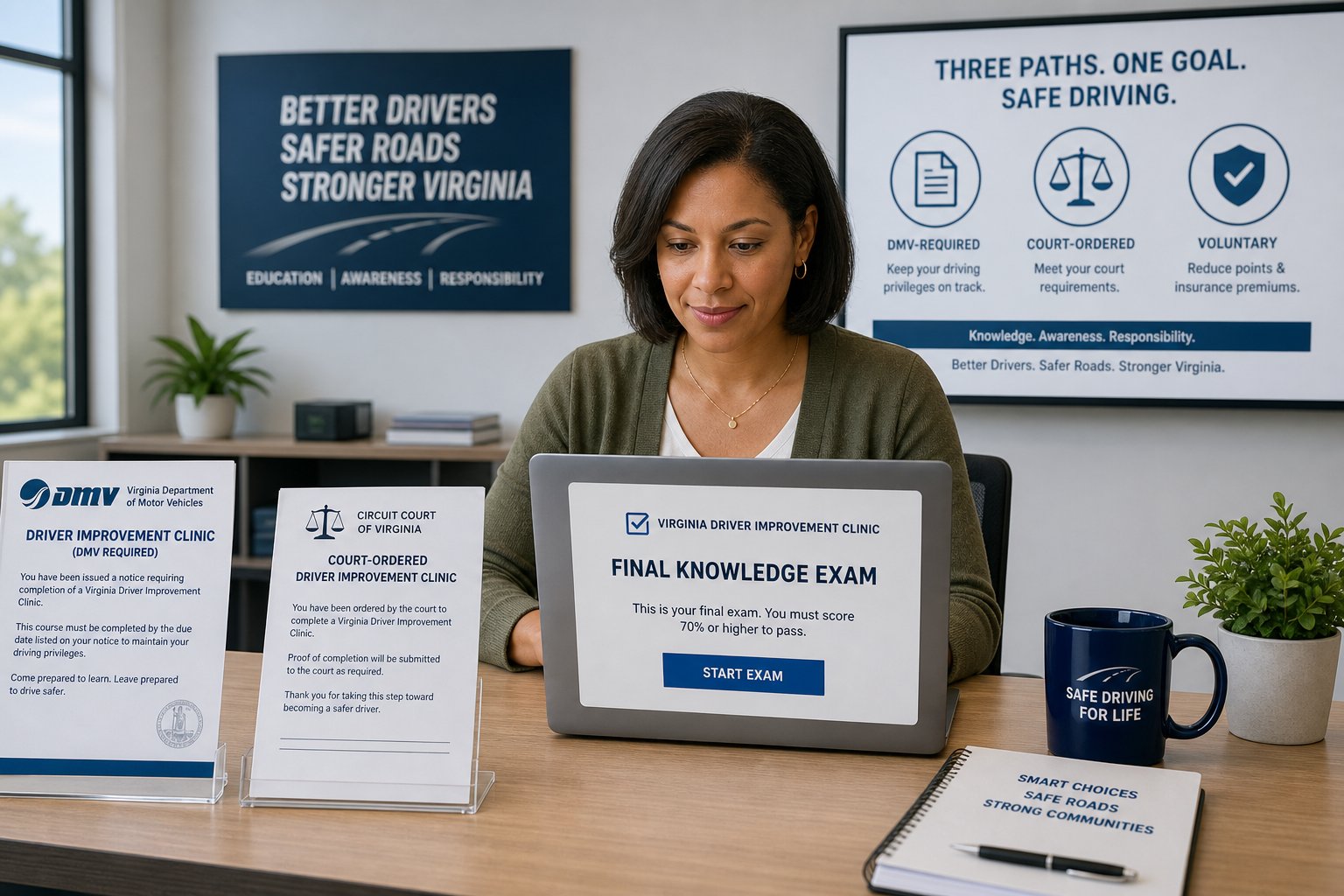
Who Needs The Virginia Driver Improvement Exam
You may need the exam if you take a Virginia Driver Improvement Clinic (DIC). In Virginia, this is the official DMV-approved 8-hour course used in several situations. The test is not a separate program for most people. It is usually the last step in the course.
Some drivers take it because the Virginia DMV tells them to. That can happen after too many demerit points, a license issue, or another driver record problem. In that case, you must follow the DMV notice closely.
Other drivers take it because a court orders it after a traffic case. If that happens, the judge, court clerk, or court papers may set a deadline. Your locality and case facts can matter.
You can also take the course on your own. A voluntary clinic may help you earn safe driving points if you qualify under Virginia DMV rules. Some people also ask their insurer whether a completed course can help with an insurance discount, but that depends on the insurance company.
How The Exam Fits Into Voluntary, Court-Ordered, And DMV-Required Courses
The exam fits into all three paths in a similar way: you complete the clinic, then finish the final knowledge check required by that provider and state rules.
Here is the basic difference:
- DMV-required: You complete the course because DMV told you to.
- Court-ordered: You complete the course because a court ordered it.
- Voluntary: You choose the course for safe driving points or possible insurance use.
The main thing is simple: the reason you take the course affects who needs proof, when it is due, and what result matters. So read every Virginia DMV notice, citation, and court paper carefully.
What The Virginia Driver Improvement Exam Covers
The exam usually covers the same topics taught in the driver improvement course. That means the final test is not supposed to feel random. If you paid attention during the clinic, the material should look familiar.
Most Virginia DMV-approved clinics teach core safe-driving topics such as:
- Virginia traffic laws
- Demerit points and driver record basics
- Defensive driving habits
- Right-of-way rules
- Following distance and speed safety
- Traffic signs, signals, and markings
- Risks from distracted, aggressive, and impaired driving
The exact wording of questions can vary by provider. Still, the broad subjects come from the clinic material. That is why your best study tool is the course itself.
If you are taking the Virginia driver improvement course test online, expect the final check to focus on practical driving knowledge rather than trick questions. For example, you may see items about what a sign means, how to reduce crash risk, or what actions lead to unsafe driving.
And because Virginia uses the course for DMV-required, court-ordered, and voluntary cases, the content stays tied to safety and legal compliance. If your notice or court order has special terms, those terms affect your requirement to complete the clinic, not usually the subject matter taught in the exam.
For current state information, check the Virginia DMV driver improvement page.
Exam Format, Timing, And Passing Rules
In general, the Virginia driver improvement exam is an untimed, multiple-choice final test given after the 8-hour clinic. That is the usual format described by Virginia-approved providers, but you should still review your own course instructions because provider procedures can differ within DMV rules.
A few points are commonly stated by providers and state guidance:
- The test is usually multiple choice.
- It is generally not timed.
- It comes after the full course is done.
- You normally test through the same provider that gave your course.
Some providers state a set number of questions and a passing score. Because rules and provider procedures can change, confirm those details in your own course materials before you rely on them.
The biggest practical issue for most drivers is not speed. It is accuracy. Since the exam is often untimed, you should slow down and read each answer choice fully. Many missed questions happen because a driver skims too fast.
Also, do not assume every provider handles attempts in the same exact way. Virginia DMV rules and provider policies can affect when you may test again, how identity checks work, and how completion is released.
If you are using an online clinic, stay inside the provider platform for the full process. A DMV-approved provider like virginia driver improvement exam should explain the final test steps clearly before you start.
What Happens If You Fail And Whether You Can Retake It
If you fail the final exam, you usually are not done forever. In many cases, Virginia drivers can retake the test, but the exact retake rules can depend on state requirements and the provider.
This is where people often get bad advice from forums or old blog posts. One provider may explain retakes one way, while another may have slightly different steps for scheduling or identity checks. So always trust the instructions from your own clinic and any official Virginia DMV or court notice tied to your case.
What matters most is this:
- Do not ignore the deadline on a DMV notice or court order.
- Do not assume a failed attempt automatically extends your time.
- Do check the provider rules for the next allowed attempt.
If your course was court-ordered, a retake delay can matter because the court may still expect proof by a fixed date. If your course was DMV-required, your license status may depend on finishing by the deadline in the notice. That is why timing matters as much as passing.
The good news is that most people do better on a second attempt if they review the sections they rushed through the first time. Go back to traffic signs, right-of-way, safe following distance, and impaired or distracted driving rules. Those topics often show up because they are central to crash prevention.
How Course Completion Is Reported To The Court, DMV, Or Insurance Company
After you pass, the next step is reporting. In Virginia, reporting can go to the Virginia DMV, the court, or your insurance company, depending on why you took the clinic.
For many DMV-approved courses, the provider sends completion information to the Virginia Department of Motor Vehicles. That electronic reporting is important for DMV-required cases and for voluntary cases where a driver may qualify for safe driving points under DMV rules. You can review general rules on the Virginia DMV website.
Court-ordered cases can be different. Even if the provider reports completion to DMV, the court may still want proof from you. That can depend on the court, judge, locality, and paperwork in your case. Read your order closely and keep your certificate.
For insurance, the provider does not usually decide whether you get a discount. Your insurer does. If your company accepts a completed clinic, you may need to send the certificate yourself.
A few practical points help:
- Save your certificate of completion.
- Check whether the court wants direct proof from you.
- Confirm whether your insurer accepts a Virginia DIC.
- Allow time for DMV posting if your record must update.
If you need a fast online option, review the steps on virginia driver improvement exam and follow the provider instructions carefully.
Study Tips To Pass Quickly Without Wasting Time
The fastest way to pass is to treat the course like the test prep. You do not need fancy tricks. You need steady focus and good notes.
Start with the basics. Pay attention during each lesson instead of clicking through fast. The final exam usually comes from the same material, so every skipped detail can come back as a missed question.
Use these simple study habits:
- Write down key rules as you go.
- Review lesson quizzes before the final.
- Read every answer choice before you click.
- Break the 8-hour course into sessions if you are tired.
- Review signs, signals, and right-of-way rules one more time.
Short study sessions often work better than one long, worn-out push. If you take the course late at night and your eyes blur on the screen, stop and come back fresh. That saves time in the long run.
It also helps to look for patterns. Questions often test whether you know the safest action, not just a legal one. That means defensive driving matters. Space, speed control, and attention are common themes.
Near the end, choose a provider with a clear process and mobile-friendly access. If you want a simple online option, you can virginia driver improvement exam.
FAQ
Does this article apply to the Virginia Driver Improvement Clinic?
Yes. It covers the Virginia DMV-approved Driver Improvement Clinic, which many drivers search for as virginia driver improvement exam.
Can the course be completed online?
Yes, Virginia allows online clinics through DMV-licensed online driver improvement providers. Court-ordered drivers should confirm that the court accepts online completion.
Does completion erase a ticket or conviction?
No. Completion does not erase a ticket, conviction, or demerit-point history. Eligible drivers may receive safe driving points or satisfy a requirement depending on the situation.
What should I check before enrolling?
Check your court order, DMV notice, deadline, license type, and the provider’s Virginia DMV approval before registering.
Conclusion
Virginia Driver Improvement Course Test: What to Expect is easier to handle when you separate the DMV rule, the court rule, and your own reason for taking the course. The course can be useful, but it does not erase tickets or guarantee court or insurance outcomes. Check your paperwork first, then choose a DMV-approved provider.
Take the Virginia Driver Improvement Course when you are ready to begin.
Related Articles
- Virginia Driver Improvement Course: The Complete Guide
- Virginia Driver Improvement Course Cost: What to Expect
- How Often Can You Take a Virginia Driver Improvement Course?
- How Long Is the Virginia Driver Improvement Course?
Sources
- Virginia DMV — Driver Improvement
- Virginia DMV — Driver Improvement Clinics
- Virginia DMV — Points System
- Virginia Judicial System
- Code of Virginia
Billy Forte is the owner of Driving Logic, a state-approved driver improvement course provider serving Virginia and other U.S. states. Driving Logic offers online driver improvement and defensive driving courses for drivers handling DMV notices, court orders, traffic tickets, and state requirements.
This article is general information, not legal advice. Virginia DMV rules, court orders, deadlines, safe driving points, insurance decisions, and case facts can differ. Use official Virginia DMV and court sources for current requirements, and consult a qualified Virginia attorney for legal guidance specific to your situation.