
Updated June 2026 · Reviewed by Billy Forte
Adults who move to Texas with a valid out-of-state driver license generally do not need to take adult driver education; instead, they transfer the license through a standard application at DPS. ADE is required only for adults 18–24 who have never been licensed anywhere, so most new residents who already drive simply surrender their old license, pass the vision test, and may have the written and driving tests waived based on their existing license. Bring proof of identity, residency, and your out-of-state license to your DPS appointment, and confirm current transfer requirements with DPS before you go.
Applies to Texas adult driver licensing. Requirements are set by TDLR and the Texas DPS and can change.
Key Facts
- Transfer, not first-license: New residents with a valid out-of-state license use the transfer process, not ADE.
- ADE is for the never-licensed: ADE is required only for adults 18–24 who have never held a license anywhere.
- Surrender the old license: The transfer process generally requires surrendering your out-of-state license.
- Tests may be waived: With a valid out-of-state license, DPS often waives the written and driving tests, keeping the vision test.
- Bring your documents: Take proof of identity, Texas residency, and your current license to the DPS appointment.
When You Need To Transfer Your License After Moving To Texas
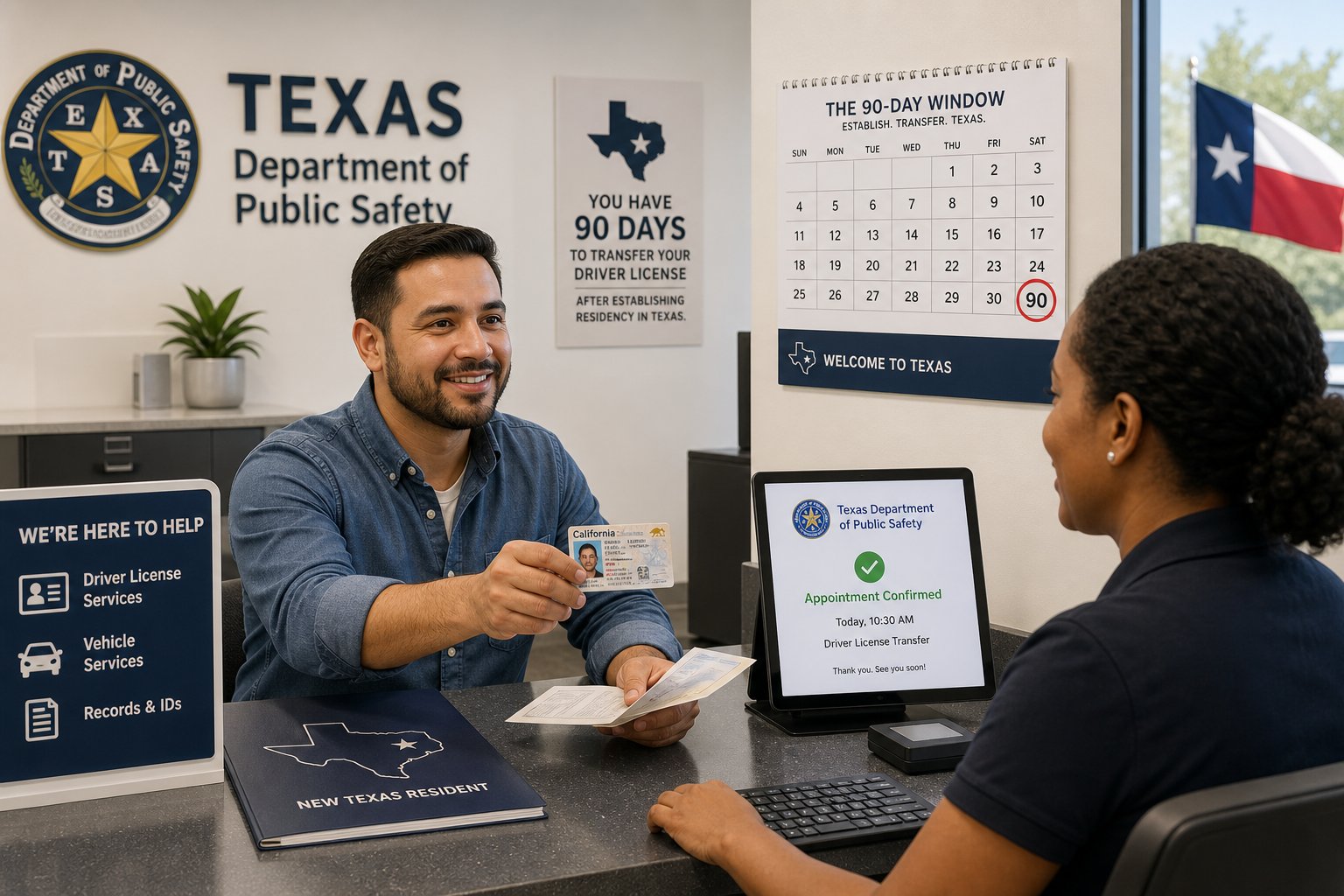
If you are wondering how to get Texas drivers license from out of state, the first rule is simple. If you moved to Texas and have a valid license from another U.S. state, U.S. territory, or Canada, you usually need to transfer it within 90 days of becoming a Texas resident.
That means you can drive for a short time after the move, but not forever. Texas expects new residents to apply for a Texas license through an in-person visit to Texas DPS.
This is a transfer process, not a first-license process. So, most adult movers do not need Adult Driver Education, and they do not need a learner license first. That point causes a lot of confusion.
Here is the key difference:
- Moving to Texas with a valid out-of-state license: transfer at DPS
- Adult age 18 to 24 with no license anywhere before: take Adult Driver Education
- Adult 25+ with no license anywhere before: ADE may be optional, depending on the case, but first-license rules still apply
If your out-of-state license is valid, Texas usually treats you as an already licensed driver. That saves time and cuts down on testing.
So if your goal is the moving to Texas drivers license adult process, start by checking your move date and making a DPS appointment before that 90-day window closes.
Who Can Transfer An Out-Of-State License And Special Cases To Know
Most adults can transfer an out-of-state license if it is valid and unexpired. This usually applies to licenses from another U.S. state, a U.S. territory, or Canada.
At DPS, you will surrender your old license. Texas generally does not let you keep an unexpired out-of-state license once the Texas license is issued.
Still, some special cases can change the process.
If your license is expired, DPS may require extra testing. That can include a written test, a driving test, or both. The longer it has been expired, the more likely you are to face extra steps.
If you are under 18, the rules are different. Texas teen driver rules apply, and a driving test is required even if you already had a license from another state.
If you have never been licensed anywhere, you are not doing a transfer at all. This is where Adult Driver Education matters. In Texas, adults 18 to 24 who are getting a first license must take a TDLR-approved 6-hour ADE course. After passing, they get the ADE-1317 certificate, which gives a written test waiver at DPS. That is one of the biggest benefits.
And don’t mix this up with defensive driving for a ticket. That is a different course with a different purpose.
Also, ITAD is separate. It is a free one-hour video course from TxDPS and may be required for certain first-time adult applicants. It is not the same as ADE.
What To Do Before Your DPS Appointment
A smooth DPS visit starts before you leave home. Texas does not make this part hard, but it does expect you to show up ready.
First, book an appointment through the Texas DPS Driver License Services system. Walk-in options can be limited, so an appointment is the safer choice.
Next, gather your documents early. Use the DPS document tools and check each item twice. Originals are best. Copies can help as backup, but they may not replace originals.
It also helps to put everything in one folder. Keep your license, proof of address, insurance, and vehicle papers together. That saves time at the counter.
If you own a car, do your vehicle steps before the appointment. Texas DPS may ask for proof of current Texas registration and insurance for each vehicle you own. If you do not own a car, be ready to state that.
One more thing matters here. If you are an adult moving from another state with a valid license, you do not need to sign up for Adult Driver Education just to transfer your license. But if you are helping someone who has never had a license before, then a TDLR-approved ADE course may be the right step.
For first-time adult applicants, online providers like Driving Logic can help complete the Texas-required course fast and on your schedule.
Vehicle Inspection, Insurance, And Registration Requirements
Before DPS, handle your Texas vehicle records if you own a vehicle.
In most cases, the order looks like this:
- Get Texas-acceptable auto insurance
- Complete a Texas vehicle inspection if required for your vehicle and county process
- Register the vehicle with your county tax office
- Keep proof of Texas registration and insurance ready for DPS
You may also need forms tied to title and registration, such as Form 130-U. Rules can vary by county process, so confirm details with your local office.
The main point is simple. DPS wants proof that your vehicle records are set up in Texas before your license transfer is completed.
Documents You Need To Bring To Transfer Your License
Document problems are one of the top reasons people leave DPS without finishing. So, bring more than the bare minimum.
Most applicants should bring:
- Your valid out-of-state license to surrender
- Proof of identity
- Proof of U.S. citizenship or lawful presence
- Proof of Social Security number
- Two proofs of Texas residency
- Proof of Texas vehicle registration for each vehicle you own
- Proof of insurance for each vehicle you own, or a statement that you do not own one
Examples of residency proof may include:
- Lease agreement
- Utility bill
- Bank statement
- Mortgage document
For identity or legal presence, accepted records can include a passport, birth certificate, or immigration document. Because rules can change, check the official list at Texas DPS and the Texas Department of Licensing and Regulation when course records are involved.
If you are transferring a valid license, that is usually enough for the driver history side of the process. But if you are a first-time adult applicant instead, DPS may also ask for course proof such as the ADE-1317 certificate and, where required, the Impact Texas Adult Drivers completion certificate.
Bring your glasses or contacts if you use them. That small detail matters more than people think.
What Happens At The Texas DPS Appointment Step By Step
Once you arrive, the process is pretty direct. You check in, wait to be called, and then work through the license station steps.
Most transfers follow a path like this:
- Check in for your appointment
- Submit or complete the application
- Show your documents
- Provide your signature and thumbprints
- Take a vision exam
- Pay the license fee
- Complete any required testing
- Take your photo
- Receive a temporary paper license
For many adults with a valid out-of-state license, there is often no driving test. In some cases, DPS may still require a knowledge test, depending on the license status and your situation.
This is another place where first-time licensing is different from transferring. If you are a first-time adult driver age 18 to 24, a TDLR-approved Adult Driver Education course can help a lot because passing it creates the ADE-1317 written test waiver. That means you do not have to take the DPS written knowledge exam.
But again, if you already hold a valid out-of-state license, that ADE benefit usually does not matter for you because you are not entering Texas as a first-time applicant.
After your appointment, DPS usually gives you a temporary paper license. Your plastic Texas license is mailed later.
If you need a first-time adult license instead of a transfer, you can take the Texas ADE course at Driving Logic and move through the state-required step on your own time.
Common Mistakes That Delay A Texas License Transfer
The biggest delays usually come from small misses. Most are easy to avoid if you prepare early.
A common mistake is bringing only one proof of Texas address. DPS often wants two. Another is forgetting proof of Social Security number.
People also get stuck when they skip the vehicle side of the move. If you own a car, missing Texas registration or insurance proof can slow the process down.
Here are the most common problems:
- Expired out-of-state license
- Missing second residency document
- No SSN proof
- No Texas registration record for owned vehicles
- No proof of insurance
- Missing glasses or contacts for the vision exam
- Waiting too long after moving
Another mistake is taking the wrong course. Some people sign up for defensive driving when they really need Adult Driver Education for a first license. Those are not the same. Defensive driving is often used for ticket dismissal. ADE is for getting a first driver license.
And some applicants confuse ITAD with ADE. They are different courses from different systems. ITAD is a free one-hour course from TxDPS. ADE is a 6-hour TDLR-approved driver education course.
If you are just transferring a valid license from another state, neither course is usually required. Your best move is to confirm your documents, confirm your vehicle records, and show up ready for DPS.
FAQ
Do new Texas residents need adult driver education?
Usually no. If you move to Texas with a valid out-of-state license, you transfer it at DPS rather than taking ADE. ADE is required only for adults 18–24 who have never been licensed.
How do I transfer an out-of-state license to Texas?
Apply at DPS with proof of identity, Texas residency, and your current license, then pass the vision test. DPS often waives the written and driving tests for valid out-of-state licenses.
When would a new resident still need ADE?
If the adult is 18–24 and has never held a driver license anywhere, ADE is required as part of getting a first license, even after moving to Texas.
What should I bring to the DPS appointment?
Bring proof of identity, proof of Texas residency, your out-of-state license, and any required documents. Confirm the current list with DPS before your visit.
Conclusion
For most people moving to Texas, the license question is a transfer, not a course: surrender the old license, pass the vision test, and you are set, often without retaking the written or driving test. ADE enters the picture only for young adults who have never been licensed at all. Check the current DPS document list before your appointment, and the transfer is usually a single, straightforward visit.
If you are a new resident who has never been licensed and needs the first-license course, you can complete Texas adult driver education online before your DPS visit.
Related Articles
- Texas Adult Driver Education (ADE) Course: The Complete Guide
- Texas Adult Driver Education for Adults Over 25: Is It Required?
- TDLR-Approved Adult Driver Education in Texas: What It Means and How to Verify
- Texas ADE-1317 Certificate: What It Is and How to Use It at DPS
Sources
- TxDPS — How to Apply for a Driver License
- TDLR — Driver Education
- TxDPS My License Online (Appointments)
Billy Forte is the owner of Driving Logic, a TDLR-approved Texas adult driver education and driver safety course provider. Driving Logic offers the online Texas Adult Driver Education (ADE) course that helps adults qualify for a first Texas driver license and waive the DPS written knowledge test.
This article is general information about Texas adult driver licensing, not legal advice. Requirements, fees, and procedures are set by TDLR and the Texas DPS and can change, so confirm current details with official Texas sources before you enroll or visit a DPS office.