
Updated June 2026 · Reviewed by Billy Forte
A Florida traffic ticket is usually civil, not criminal, if it is a standard moving violation like speeding or failing to yield. In Florida, most routine tickets are handled as non-criminal traffic infractions under Chapter 318 of the Florida Statutes, and they are commonly resolved by paying a civil penalty, electing an eligible driver improvement option, or asking for a hearing. Some traffic offenses are criminal instead, and certain citations also require a court appearance under section 318.19, so the exact rules depend on the charge, county, court, judge, and case type.
This article covers Florida requirements only.
Key Facts
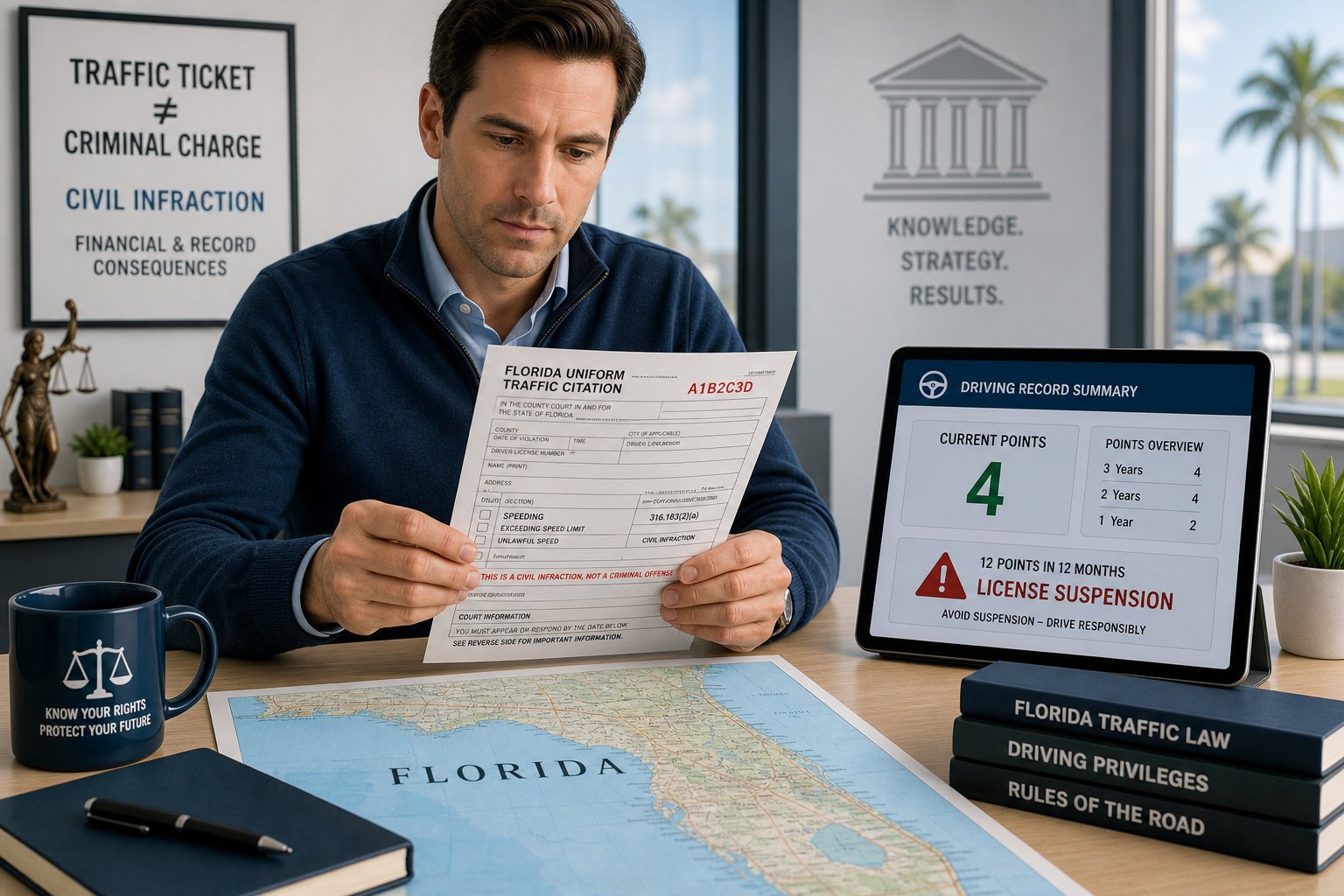
- Most tickets: Civil traffic infractions — handled through the county clerk, result in fines and points
- Criminal violations: DUI, reckless driving, racing, leaving the scene with injury — criminal charges requiring court appearance
- Key difference: Criminal violations create a criminal record; civil infractions do not
- Traffic school: Available for eligible civil infractions; not available for criminal traffic charges
- Check your citation: Mandatory court appearance language signals a criminal or serious civil charge
- CDL holders: Federal regulations classify commercial vehicle violations under additional standards
Key Facts
- Most tickets: Civil traffic infractions — handled through the county clerk, result in fines and points
- Criminal violations: DUI, reckless driving, racing, leaving the scene with injury — criminal charges requiring court appearance
- Key difference: Criminal violations create a criminal record; civil infractions do not
- Traffic school: Available for eligible civil infractions; not available for criminal traffic charges
- Check your citation: Mandatory court appearance language signals a criminal or serious civil charge
- CDL holders: Federal regulations classify commercial vehicle violations under additional standards
What A Florida Traffic Ticket Civil Infraction Means
A Florida traffic ticket civil infraction means the ticket is usually a non-criminal traffic violation. In plain terms, that usually means you are not being charged with a crime, and the usual penalty is a fine, possible points, and other driving-record consequences, not jail time.
Florida handles many routine traffic violations under Chapter 318. Common examples often include speeding, running a red light, failure to yield, and other everyday moving violations. That said, not every traffic matter is civil. Some conduct on the road can lead to a criminal charge instead, depending on the statute involved.
This is where people get tripped up. They see the word “ticket” and assume all tickets are basically the same. They aren’t. A civil infraction is different from a misdemeanor or felony traffic offense. For many civil citations, you can often resolve the case without a full court fight by paying the penalty, electing an eligible driver improvement option, or requesting a hearing.
But the details matter. Your eligibility, deadline, fee amount, hearing options, and clerk instructions can vary based on the citation itself and where it was issued. A county clerk’s traffic page or court page may explain local procedures, while the statewide framework comes from Florida law and the Florida Highway Safety and Motor Vehicles.
So if you are asking, is a speeding ticket a misdemeanor in Florida, the answer is usually no for an ordinary speeding citation. In many cases, it is a civil infraction. But very high speed allegations or other facts can trigger required court handling, and some traffic offenses outside ordinary civil citations can be criminal.
Your 3 Main Choices After Getting A Citation
After you get a civil citation in Florida, you usually have 3 main choices. Which one fits depends on your ticket, your license type, your timeline, and what the clerk or court says on the citation.
Pay The Fine
If you pay the fine, you are generally resolving the case by accepting responsibility. In many situations, that means the ticket is treated as a conviction, and points may be added to your Florida driving record if the violation carries points. The citation can also remain part of your driving history.
This is often the fastest option, but it may not be the best long-term option for every driver. Points can matter later if you collect more violations, and insurers may review your record when setting rates. The exact fine, due date, and payment method can depend on the county clerk and the citation.
Elect Traffic School Or A Driver Improvement Course
For many eligible civil infractions, Florida allows you to elect Basic Driver Improvement, often called traffic school or a driver improvement course. Under FLHSMV guidance, this option is generally available if you make the election within the required time, commonly within 30 days, and if you meet the state limits. In general, a driver can elect this option once every 12 months, up to 5 times in a lifetime.
If you are eligible and complete the course as required, points are generally not assessed for that citation, although the ticket still appears on your record and is often shown with adjudication withheld rather than erased. That distinction matters.
If you need a flexible option, Driving Logic offers an online Florida Basic Driver Improvement course designed for busy drivers who want to complete a state-approved requirement on their own schedule. Before you enroll, check your citation and clerk instructions carefully because CDL holders are not eligible to choose this option, and local instructions can differ.
The third option is to request a hearing to contest the citation. Florida courts may allow an informal or formal hearing depending on the case. Possible outcomes can include dismissal, withheld adjudication, a reduced penalty, or a finding of guilt. The process, deadlines, and paperwork depend on the court handling your case.
When You May Need A Court Hearing Or Required Court Appearance
Most civil traffic infractions in Florida do not require you to appear in court just to resolve the ticket. But some do. That is an important line, because missing a required court date can create bigger problems than the original citation.
Florida law lists certain situations where a court appearance is required. You can find that list in section 318.19, Florida Statutes. Examples include a crash involving serious bodily injury or death, driving 30 mph or more over the speed limit, passing a stopped school bus on the side where children enter or exit, and some uncovered-load or no-insurance crash situations.
Even when an appearance is not mandatory under the statute, you may still choose to request a hearing if you want to contest the citation instead of paying it or electing school. Florida traffic courts may use different hearing formats, and county procedures can vary. Some courts explain traffic options on their clerk sites, such as the Miami-Dade Clerk traffic page, while others use different forms or online systems.
Read the citation closely. Then check the clerk or court website for the county listed on the ticket. Look for appearance requirements, response deadlines, election deadlines, and proof-of-compliance instructions. If the citation, clerk, or judge gives you a date or direction, follow it exactly. A small ticket can turn into a license problem fast when deadlines are missed.
If your ticket appears to involve one of the required-appearance categories, confirm the next step with the clerk before you assume traffic school or simple payment is enough.
What Happens If You Ignore The Ticket Or Miss A Deadline
Ignoring a Florida traffic ticket is one of the worst ways to handle it. The state has a system for noncompliance, and it does not just fade away.
If you do not respond by the deadline, the clerk can report the case to the state, and FLHSMV may suspend your driver’s license. In Florida, people often hear this called a D-6 suspension. The Florida Courts traffic page and county clerk resources often explain that failure to comply with a traffic citation, court order, or required appearance can trigger suspension and added costs.
That can mean more than just paying the original ticket. You may face late fees, collection costs, reinstatement fees, and extra steps before you can legally drive again. And if you keep driving while suspended, that can create a much more serious legal issue than the original civil infraction.
Deadlines also matter if you want to elect a course. If Florida law or your clerk gives you a set period to choose traffic school, missing that window may take the option off the table. The same is true for requesting a hearing. Once the deadline passes, your choices may narrow.
The practical rule is simple: do not ignore the citation, court notices, clerk instructions, or FLHSMV mail. Check the due date on the ticket. Then verify the county process on the clerk or court website and keep a copy of anything you submit or complete.
How Civil Infractions Can Affect Your Driving Record, Insurance, And CDL
A civil infraction may be non-criminal, but that does not mean it is minor for your driving record.
For many Florida moving violations, a conviction adds points to your record. Too many points in a set period can lead to a license suspension under FLHSMV rules. The state explains point-related consequences on its driver license system pages. And even when a citation is dismissed or resolved without points, the event can still remain visible on your Florida driving history. Florida does not treat these records like they never existed.
Insurance is a separate issue. Insurers often review motor vehicle records when setting premiums or deciding whether to renew coverage. A civil ticket does not guarantee your rate will go up, but convictions and points can affect what an insurer sees. That is one reason many eligible drivers look closely at whether a BDI election is available, rather than automatically paying the fine.
CDL drivers need to be extra careful. Under Florida rules, traffic school is not available to CDL holders for this purpose. And under commercial driving rules, some violations that seem routine in a personal vehicle context can carry serious consequences for a commercial license. Multiple serious offenses within a three-year period can lead to CDL disqualification. The FLHSMV commercial driver license section is the right place to review the state’s current CDL framework.
If you are eligible and your citation allows a BDI election, you can review the online Florida Basic Driver Improvement course and compare it with the instructions on your ticket before you choose a response. This article is for general Florida information only and is not legal advice.
How County Rules and Fines Can Vary
Florida traffic ticket fine amounts, court costs, and surcharges vary significantly by county. The base fine for a speeding violation is set by state law under Florida Statute 318.18, but county and local surcharges, court costs, and administrative fees can substantially increase the total amount due. Check with the Clerk of Court in the county where the ticket was issued for the exact total amount and any local requirements before paying or electing traffic school.
FAQ
Is a Florida traffic ticket a criminal offense?
Most Florida traffic tickets are civil traffic infractions — not criminal offenses. Civil infractions include most speeding tickets, improper lane changes, and similar moving violations. They result in fines and points but do not create a criminal record.
Which Florida traffic violations are criminal?
Criminal traffic violations in Florida include DUI, reckless driving, racing on a highway, leaving the scene of an accident with injury or death, and certain other serious violations. Criminal charges are processed through the criminal court system and can result in criminal records, probation, and incarceration.
How do I know if my Florida traffic ticket is criminal or civil?
Check your citation for language like “must appear” or “mandatory court appearance.” Civil infractions generally allow you to pay, elect traffic school, or request a hearing without an automatic court requirement. If your citation requires a court appearance, treat it as a more serious matter and consider consulting a Florida traffic attorney.
Can I elect traffic school for a criminal traffic violation?
No. Traffic school election under Florida Statute 318.14 applies only to eligible noncriminal moving violations. Criminal traffic charges must be addressed through the criminal court process.
Does a civil traffic infraction in Florida affect my criminal background check?
Generally, no. Civil traffic infractions are not criminal convictions and typically do not appear on criminal background checks. They do appear on your FLHSMV driving record. Criminal traffic convictions do appear on criminal background checks.
What should I do if I am not sure whether my Florida ticket is criminal or civil?
Read the citation carefully for any mandatory appearance language. If you are unsure, contact the Clerk of Court in the county where the ticket was issued and ask how the violation is classified. Consulting a Florida traffic attorney is advisable for any citation with mandatory appearance requirements.
Conclusion
The vast majority of Florida traffic tickets are civil infractions — not criminal charges. The classification determines your options, your record impact, and whether traffic school is available. When in doubt, check the citation language and contact the Clerk of Court before making any decision about how to respond.
Take the Florida BDI course online at Driving Logic
Related Articles
- Florida Traffic Ticket: Costs, Points, and Traffic School Options
- Florida Speeding Ticket Cost: What Affects the Total?
- Florida Red Light Camera Tickets: Do They Add Points to Your License?
- Florida Traffic Ticket Options: Pay, Elect Traffic School, or Contest
Sources
- FLHSMV — Driver Improvement Schools
- FLHSMV — Basic Driver Improvement Course Providers
- Florida Statute 318.14 — Noncriminal Traffic Infractions
- Florida Statute 322.27 — Authority of Department to Suspend or Revoke License
- Florida Clerks of Court
Billy Forte is the owner of Driving Logic, a state-approved driver improvement course provider serving Florida and other U.S. states. Driving Logic offers FLHSMV-approved online BDI courses for drivers handling traffic tickets, court orders, and state requirements.
This article is general information, not legal advice. Eligibility, deadlines, court acceptance, and filing steps depend on the citation type, county, court, judge, and the facts of your case. Use official Florida court and state sources for current requirements, and consult a qualified Florida attorney for legal guidance specific to your situation.