
Updated June 2026 · Reviewed by Billy Forte
A first reckless driving offense in Indiana with no injury is often charged as a Class C misdemeanor. This article is for Indiana drivers who need a clear explanation before responding to a ticket, court notice, or BMV record issue. You will learn what the rule means, where the Driver Safety Program may fit, and what to check before your next step.
This article covers Indiana requirements only.
Key Facts
If you need a BMV-approved online option, review the reckless driving indiana first offense before your deadline.
In practical terms, drivers searching for reckless driving indiana punishment should read the court paperwork and BMV record together before choosing the next step.
- First offense: A no-injury first offense is commonly a Class C misdemeanor.
- Possible penalties: Court penalties can include jail exposure and fines.
- Points: A conviction can add Indiana BMV demerit points.
- Mitigation: Voluntary DSP completion may be one responsible step, but it guarantees nothing.
- Escalation: Property damage, injury, or school-bus facts can raise the level.
What Counts As Reckless Driving In Indiana
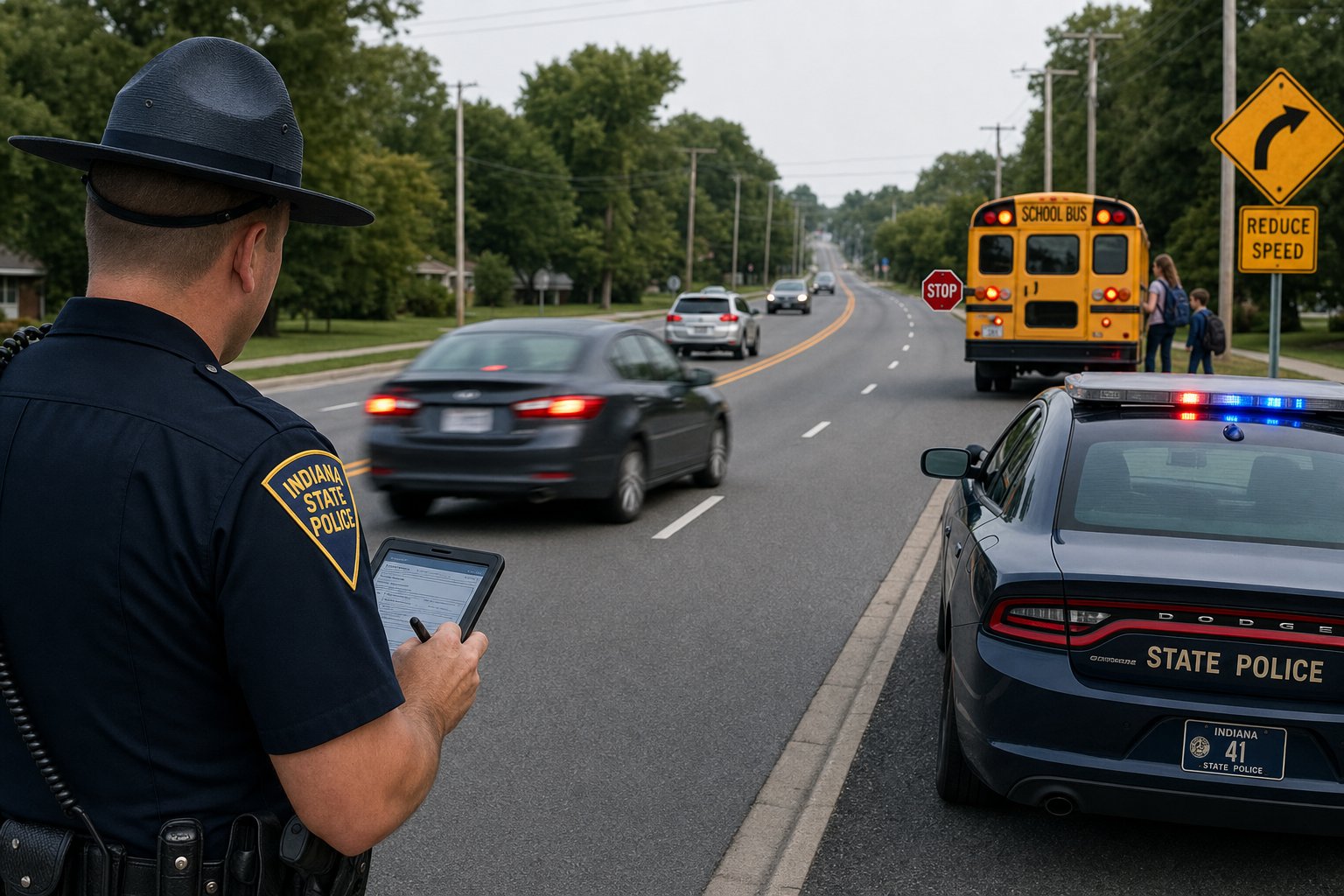
Indiana reckless driving is not just any speeding ticket. Under Indiana Code 9-21-8-52, it is a criminal traffic offense.
The law lists several acts that can support a reckless driving charge. Common examples include:
- Driving at an unreasonably high rate of speed that puts people or property at risk
- Driving at an unreasonably low speed that blocks traffic and creates danger
- Passing another car from the rear on a hill or curve when there is less than 500 feet of clear view
- Weaving in and out of traffic
- Refusing to give half the road to a passing driver or speeding up when being passed
- Passing a stopped school bus with its stop arm out
That matters because many drivers assume reckless driving means only extreme speeding. In Indiana, the charge can cover a wider range of conduct if the state believes the driving was dangerous.
A first charge often starts with the officer’s observations. The court may look at speed, traffic, weather, road layout, and how much risk your driving created. So, two cases with the same speed can still be treated differently.
You should also know that reckless driving is separate from a simple infraction. It can create both court penalties and Indiana BMV consequences. That is why the exact facts on the citation, police report, and court notice matter.
When A First Offense Can Be A Misdemeanor Or Felony
For most reckless driving Indiana first offense cases with no injury, the charge is a Class C misdemeanor. That is the default level many drivers face.
But the level can rise fast if the facts are worse. Indiana law allows higher charges when reckless driving causes harm:
- Class C misdemeanor: no injury or property damage
- Class B misdemeanor: property damage results
- Class A misdemeanor: bodily injury results
- Level 6 felony: passing a stopped school bus and causing injury
- Level 5 felony: passing a stopped school bus and causing death
So, yes, a first offense can be a felony in Indiana, but not in the usual no-injury case. The felony enhancement usually comes up in the school bus situation, not in a basic first reckless driving charge.
This is one place where details matter a lot. A person may say it was just fast driving, while the state may claim there was damage, injury, or a protected school bus situation. Those facts can change both the charge level and the possible sentence.
If your paperwork mentions property damage, bodily injury, or a stopped school bus, read it closely. Also check any court order and any Indiana BMV notice. The charge level affects jail exposure, fines, and the long-term impact on your record.
Penalties You May Face For A First Reckless Driving Conviction
For a no-injury first offense, the reckless driving Indiana first offense penalties usually mean a Class C misdemeanor. That carries up to 60 days in jail and up to a $500 fine under Indiana law.
The key word is up to. A judge does not have to impose the maximum sentence. Courts often look at the full picture, including:
- Your prior driving and criminal record
- Whether anyone was put at serious risk
- The speed involved or other dangerous acts
- Whether there was an accident
- Whether you followed court instructions
- Any steps you took before court, such as voluntary course completion
One possible mitigating step is a BMV-approved Driver Safety Program (DSP). In Indiana, the official DSP is a 4-hour course approved by the Indiana Bureau of Motor Vehicles. Taking it before court does not guarantee a better outcome, and it does not erase a conviction. Still, in some cases, proof of completion may be considered by the court, prosecutor, or attorney as one fact among many.
If the case includes property damage or injury, the penalties increase a lot. A Class B misdemeanor can bring up to 180 days in jail and $1,000 in fines. A Class A misdemeanor can bring up to 1 year in jail and $5,000 in fines. Felony school bus cases can go much higher.
Because sentencing is fact-based, do not assume another driver’s result will be your result.
How A Conviction Can Affect Your License, Insurance, And Record
A reckless driving conviction can affect more than the court case. It can also affect your license status, BMV record, insurance, and criminal record.
First, Indiana assigns 6 demerit points for reckless driving on your BMV record. You can confirm point rules through the Indiana BMV and related state rules in the Indiana Administrative Code.
Second, reckless driving is treated as a serious offense. In some cases, a court may recommend a suspension, and broader license effects may depend on your full record and status. If you already have prior violations, points, or Habitual Traffic Violator issues, one more major offense can matter more.
Third, insurance may get more expensive after a conviction. Insurers set their own rates, so the increase is not the same for every driver. But a criminal traffic conviction and 6 points can raise risk in the insurer’s view.
It is also important to understand what a DSP can and cannot do. A BMV-approved course may provide a 4-point credit when the Indiana BMV allows it, but that credit reduces the active point total. It does not remove the conviction, and it does not erase the underlying violation from your record.
Requirements may depend on your BMV notice, court order, citation, driver record, license status, court, judge, and case facts. Read each document carefully and follow all deadlines.
Common Defense Strategies In Indiana Reckless Driving Cases
The main issue in many cases is whether the facts really show recklessness. That is different from saying someone made a mistake or was simply speeding.
Some common defense themes include:
- The driving was careless, but not reckless
- The officer’s view or memory was limited
- The driver was misidentified
- The speed estimate or device evidence is weak
- Road, traffic, or emergency conditions explain the conduct
- The facts do not match the exact act listed in the statute
For example, a driver may be accused of weaving, but dashcam video may show a lane change to avoid debris. Or a driver may be charged for an unreasonably high rate of speed, but the state may still need strong proof of danger, not just a rough estimate.
A necessity claim can also come up in limited cases, such as trying to avoid a crash. But these issues depend heavily on the facts. And they are legal matters best reviewed by an Indiana attorney.
What you should not do is argue the case online, post about it on social media, or assume the charge will drop on its own. If you want to protect your position, keep your statements limited and save any photos, video, or notes that may help explain what happened.
What To Do After A Reckless Driving Charge
Start with the paperwork. Read the citation, court notice, and any Indiana BMV notice as soon as you get them.
Check these details first:
- Your court date and time
- The court name and county
- The exact charge listed
- Any order to appear
- Any deadline tied to the case or your license
Next, write down your memory of the event while it is fresh. Include where you were, traffic conditions, weather, speed, passengers, and anything unusual. Save dashcam footage, photos, and documents if you have them.
If you are considering legal help, talk to an Indiana traffic or criminal defense attorney quickly. A lawyer can explain the charge level, possible exposure, and local court process. That is especially important if the case involves injury, property damage, a school bus, or a prior record.
Also, do not ignore required appearances or notices. Missing a court date can create more problems than the original citation.
In some situations, a course may be mentioned by the court, your attorney, or a prosecutor. If that happens, make sure the course is the correct BMV-approved Driver Safety Program and that it matches the court or BMV requirement before you enroll.
When A Driver Safety Or Court-Ordered Course May Help
A driver safety course may help in some Indiana cases, but only in the right setting. It is not an automatic fix.
Sometimes a court, prosecutor, or attorney may raise a course as part of mitigation, informal probation, diversion, or another case resolution. In those situations, the course often needs to be the Indiana BMV-approved Driver Safety Program (DSP). The official DSP is a 4-hour course.
A course may also matter when the Indiana BMV requires it based on your notice or license status. That is why you should match the course to the exact requirement in your notice, order, or case.
If you need a BMV-approved Indiana course, Driving Logic offers the Indiana Driver Safety Program online through MyDrivingLogic.com. It is built for busy drivers who want flexible access on a phone, tablet, or computer and need a simple completion process.
Still, keep expectations realistic. Taking a course does not guarantee dismissal, a reduced charge, lower insurance, or a better sentence. And it does not remove a conviction from your record.
If your court, attorney, or BMV notice allows or requires the DSP, you can review the Indiana BMV information and then take the approved Indiana Driver Safety Program online at Driving Logic.
FAQ
Can the Indiana DSP help after reckless driving?
It may help with BMV point credit if you complete a BMV-approved course and qualify. It does not dismiss the charge or erase a conviction.
Does the DSP remove reckless driving from my record?
No. Indiana BMV says DSP completion does not remove a citation from driver history. It can apply a 4-point credit when eligible.
Is reckless driving the same as speeding?
No. Speeding is often a traffic infraction, while reckless driving can be a criminal traffic offense based on dangerous conduct.
What should I check first?
Check your citation, court notice, BMV record, and any deadline. Those documents control your next step.
Conclusion
Indiana Reckless Driving First Offense: What to Know depends on the exact Indiana charge, court paperwork, and BMV record impact. The Indiana Driver Safety Program may provide a 4-point credit when eligible, but it does not erase reckless driving, dismiss a charge, or guarantee a court result. Check your citation, court notice, and BMV record before deciding what to do next.
Take the Indiana Driver Safety Program course online when you are ready to begin.
Related Articles
- Reckless Driving in Indiana: Penalties, Points, and Driver Safety Options
- What Is Reckless Driving in Indiana? IC § 9-21-8-52 Explained
- What Speed Is Considered Reckless Driving in Indiana?
- Indiana Reckless Driving vs. Speeding Ticket: Key Differences
Sources
- Indiana BMV — Citation Points and Driver Safety Program
- Indiana BMV — Driver Record Points
- Indiana Code — Title 9 Motor Vehicles
- Indiana Code and Administrative Rules
Billy Forte is the owner of Driving Logic, a state-approved driver improvement course provider serving Indiana and other U.S. states. Driving Logic offers online driver safety and driver improvement courses for drivers handling BMV notices, court orders, and state requirements.
This article is general information, not legal advice. Indiana BMV rules, court orders, deadlines, provider reporting, insurance decisions, and case facts can differ. Use official Indiana BMV and court sources for current requirements, and consult a qualified Indiana attorney for legal guidance specific to your situation.