
Updated June 2026 · Reviewed by Billy Forte
The cost of a Florida speeding ticket depends on how far over the limit you were driving, where it happened, and the court costs added by the county. On normal roads, many Florida tickets end up around $130 to $280, but school zones and work zones can push the total much higher because extra penalties often apply. If the ticket says 30 mph or more over the limit, a court appearance is often required, and very high-speed cases can bring much steeper penalties under Florida Statutes.
This article covers Florida requirements only.
Key Facts
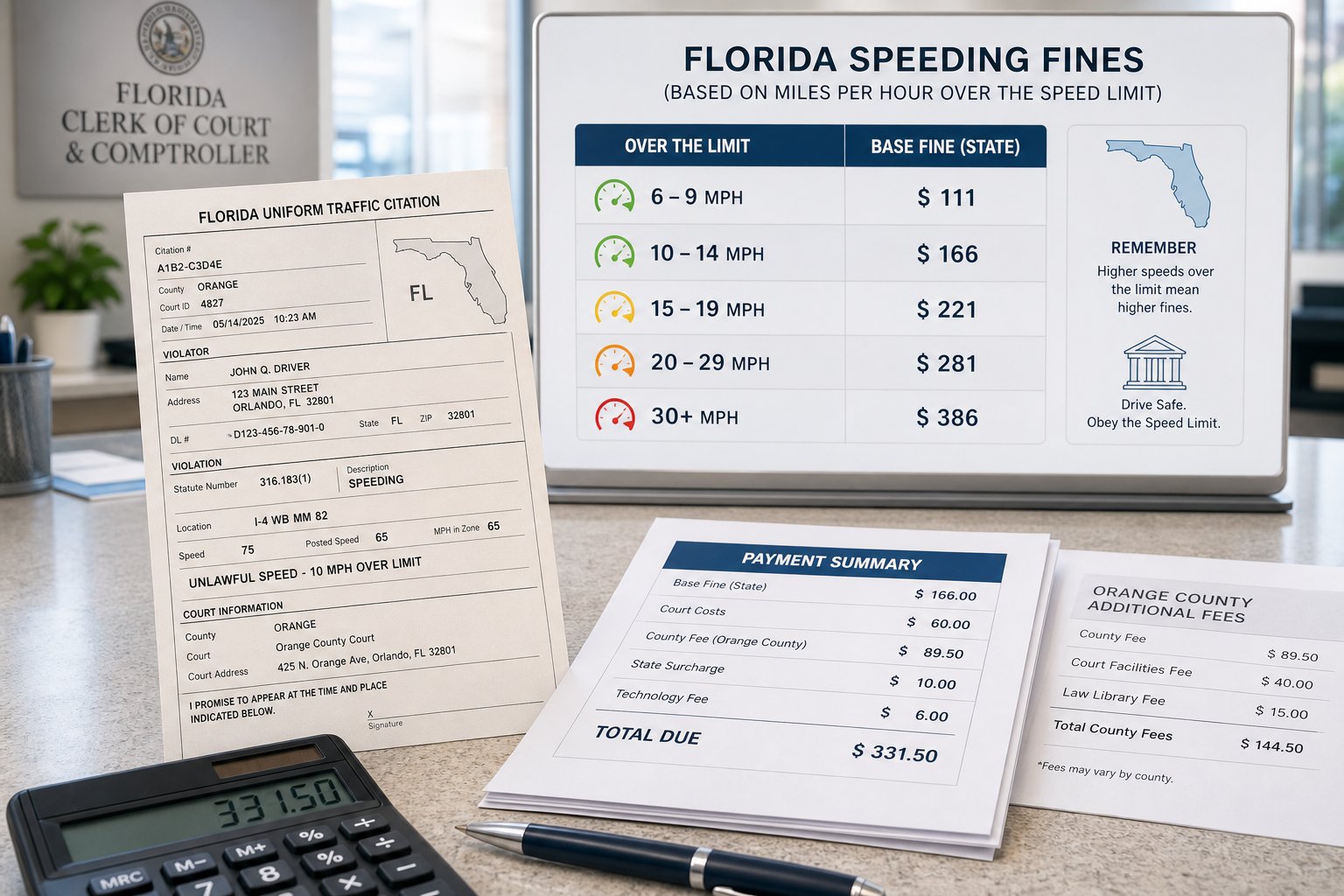
- Base fine: Set by Florida Statute 318.18 based on how far over the speed limit you were driving
- Surcharges: County and local surcharges, court costs, and fees increase the total — often 2 to 4 times the base fine
- School zone: Fine may be doubled when school is in session or children are present
- Work zone: Fine may be doubled when workers are present in the zone
- Points: 3 points for under 15 mph over; 4 points for 15 mph or more over the limit
- Traffic school: Electing BDI withholds adjudication for eligible citations — no new points added
Key Facts
- Base fine: Set by Florida Statute 318.18 based on how far over the speed limit you were driving
- Surcharges: County and local surcharges, court costs, and fees increase the total — often 2 to 4 times the base fine
- School zone: Fine may be doubled when school is in session or children are present
- Work zone: Fine may be doubled when workers are present in the zone
- Points: 3 points for under 15 mph over; 4 points for 15 mph or more over the limit
- Traffic school: Electing BDI withholds adjudication for eligible citations — no new points added
How Much A Florida Speeding Ticket Usually Costs
A lot of drivers want one simple number. The hard part is that Florida speeding ticket fines are not one flat statewide price after all fees are added.
In many counties, a basic speeding citation on a regular road often lands in these rough ranges:
- 6–9 mph over: about $131–$149
- 10–14 mph over: about $199–$219
- 15–19 mph over: about $249–$269
- 20–29 mph over: about $274–$294
- 30+ mph over: about $356–$379 or more
Those totals usually include more than the base fine. Florida law sets penalty levels, but the full amount on your ticket often includes court costs, clerk costs, and local add-on fees. That is why the same speed in one county may cost more than the same speed in another.
The base statutory fine can be much lower than the final total you pay. For that reason, if you are asking how much is a 20 over speeding ticket in florida, the safest answer is that it is often in the high-$200 range on a regular road, but you should verify the exact amount with the clerk listed on your citation.
Check your citation closely. It should show the charge, the speed listed, and the county handling the case. Then compare that with the local clerk or court page, such as the Florida Courts system or the county clerk named on your ticket.
When Fines Increase For Higher Speeds, School Zones, And Construction Zones
Speed matters, but location matters too.
As your alleged speed goes up, the fine usually goes up with it. That part is straightforward. But tickets in school zones and construction or work zones can cost much more, because Florida law allows enhanced penalties in those areas. In many counties, drivers see totals that are roughly doubled compared with similar speeds on a normal road.
That means even a lower-speed ticket in a protected zone can get expensive fast. Examples reported by county schedules often look like this:
- 1–9 mph over in a school or work zone: around $156
- 10–14 mph over: around $299–$306
- 20–29 mph over: around $449–$456
And then there are the serious cases. If a citation says 30 mph or more over the limit, many courts require you to appear. If it says 50 mph or more over, the penalties can become much more severe, including very large fines under Florida Statute 318.18.
Citation details can also change what happens next. The zone type, whether workers were present, whether a crash happened, and whether the charge is treated as a civil infraction or something more serious all matter. That is why you should not rely on a generic online estimate when the ticket itself has the key facts.
How Points Work On A Florida License
The fine is only part of the story. A speeding ticket can also add points to your driving record.
According to the Florida Highway Safety and Motor Vehicles, a typical speeding violation leads to:
- 3 points if you were driving 15 mph or less over the limit
- 4 points if you were driving more than 15 mph over the limit
- 6 points if speeding caused a crash
Those points can build into a suspension if you get too many in a set time period:
- 12 points in 12 months: 30-day suspension
- 18 points in 18 months: 3-month suspension
- 24 points in 36 months: 1-year suspension
Points generally stay on your Florida driving record for three years. That does not mean every insurer treats them the same way, but it does mean the ticket can follow you longer than the day you pay it.
This is one reason many drivers look carefully at all available options before they respond. Your eligibility, deadlines, and procedure can depend on the citation, county, court, judge, and case type. If you already have points, even one more ticket may matter more than you think. Before you decide, review your record through FLHSMV and read the instructions on the citation itself.
The Hidden Cost Of A Ticket: Insurance, Fees, And Long-Term Impact
For many drivers, the ticket amount is not the most expensive part. The bigger cost can show up later.
A single speeding ticket may lead to higher insurance premiums, and that increase can last for years. Depending on your driving history, insurer, and rating factors, the added cost can be several hundred dollars per year. Over three to five years, the total hit can be much larger than the original fine.
Then there are the other costs people forget about:
- Court and clerk fees built into the ticket total
- Time away from work for hearings or paperwork
- Extra course fees if a court orders education
- More risk of suspension if you already have points
- Possible problems with policy pricing or renewal after multiple violations
That is why the true cost of a Florida speeding ticket can end up well above the number printed on the front page. For some drivers, a few hundred dollars becomes well over $1,100 to $2,500+ once insurance and related costs are included.
The exact impact depends on your record and the details of the case. A first ticket is different from a repeat ticket. A minor speed on a normal road is different from a high-speed citation in a school zone. And county fees vary. So while no one can promise your insurance outcome, it is smart to think beyond the initial payment and weigh the full long-term cost before you choose a response.
Your 3 Main Options After Getting A Florida Speeding Ticket
Most Florida drivers need to respond within about 30 days, but you should follow the exact deadline and instructions on your citation and the clerk notice for your case.
Your three basic options are usually:
- Pay the ticket
This ends the case for a standard civil citation, but it usually means a conviction is entered and points can be assessed if the offense carries points.
- Elect traffic school
If you qualify, you may be able to choose a Basic Driver Improvement (BDI) course. In eligible cases, this can help you avoid points when adjudication is withheld. Some counties also reduce part of the fine, often by up to 18%, but that depends on local practice and case type.
- Contest the ticket
You can request a hearing and try to challenge the citation. Some drivers hire a traffic attorney. If you do not win, you may still owe the fine and added court costs.
When A Driver Improvement Course Can Help
A BDI course can be useful when the ticket is eligible and you have not used that option too recently. Florida generally limits this election to once in 12 months and no more than five times in a lifetime for eligible non-criminal cases. It is not a fit for every ticket, especially serious speeding charges.
If you need a flexible online option, Driving Logic’s Florida Basic Driver Improvement course is built for busy drivers who want to complete state-required training on their own schedule.
What To Check Before You Pay, Contest, Or Elect Traffic School
Before you do anything, slow down and check the facts on the ticket.
Start with these items:
- The exact speed charged and the posted limit
- Whether the ticket says school zone or construction/work zone
- Whether there was a crash
- The due date and whether a court appearance is required
- The county clerk or court named on the citation
- Whether you may be eligible to elect BDI traffic school
- Your current points and recent traffic school history
This matters because eligibility, deadlines, fees, court procedures, and clerk instructions can depend on the citation, county, court, judge, and case type. A driver with a simple 9-over citation may have very different options from a driver cited for 31 over or for a zone-enhanced violation.
Use official sources when you verify details. Start with the county clerk or court on the citation. You can also review driver record and points information with FLHSMV and look up controlling law in the Florida Statutes.
Do not miss deadlines, ignore clerk instructions, or assume traffic school is automatic. Confirm the rules for your case first, then act. This information is general only and not legal advice.
How County Rules and Fines Can Vary
Florida traffic ticket fine amounts, court costs, and surcharges vary significantly by county. The base fine for a speeding violation is set by state law under Florida Statute 318.18, but county and local surcharges, court costs, and administrative fees can substantially increase the total amount due. Check with the Clerk of Court in the county where the ticket was issued for the exact total amount and any local requirements before paying or electing traffic school.
FAQ
What determines the total cost of a Florida speeding ticket?
The total cost depends on how far over the speed limit you were driving (base fine under Florida Statute 318.18), the county where the ticket was issued (surcharges and court costs), and whether the violation occurred in a school or work zone (which may double the fine).
Are Florida speeding fines the same in every county?
No. While the base fine is set by state law, county and local surcharges and court costs vary. The actual amount you owe depends on the county where the ticket was issued. Always confirm the exact total with the Clerk of Court before paying.
How much more does a school zone speeding ticket cost in Florida?
School zone speeding fines are typically doubled when school is in session or when children are present. Work zone speeding fines are typically doubled when workers are present. These multipliers apply on top of the base fine for the speed over the limit.
Does electing traffic school reduce my speeding fine in Florida?
No. Electing traffic school does not reduce the base fine — you still pay the citation fine and the clerk’s election fee. However, it withholds adjudication, which keeps points off your record and may limit long-term costs like insurance rate increases.
What happens if I cannot afford to pay my Florida speeding ticket fine?
Contact the Clerk of Court to ask about payment plans or other options. Do not ignore the ticket — unpaid fines can lead to additional penalties and a license hold.
How does the fine change if my speeding was significantly over the limit?
Higher speeds over the limit result in a higher base fine under Florida’s tiered fine structure. In some cases, extreme speeds may be charged as criminal offenses rather than civil infractions, which carries more serious consequences.
Conclusion
Florida speeding ticket fines include much more than the stated base fine — surcharges and court costs add substantially to the total. Traffic school election withholds the points but does not reduce the fine. Know the full cost before deciding how to respond, and act within the 30-day election window if you want to protect your record.
Take the Florida BDI course online at Driving Logic
Related Articles
- Florida Traffic Ticket: Costs, Points, and Traffic School Options
- Florida Speeding Ticket Cost: What Affects the Total?
- Florida Red Light Camera Tickets: Do They Add Points to Your License?
- Florida Traffic Ticket Options: Pay, Elect Traffic School, or Contest
Sources
- FLHSMV — Driver Improvement Schools
- FLHSMV — Basic Driver Improvement Course Providers
- Florida Statute 318.14 — Noncriminal Traffic Infractions
- Florida Statute 322.27 — Authority of Department to Suspend or Revoke License
- Florida Clerks of Court
Billy Forte is the owner of Driving Logic, a state-approved driver improvement course provider serving Florida and other U.S. states. Driving Logic offers FLHSMV-approved online BDI courses for drivers handling traffic tickets, court orders, and state requirements.
This article is general information, not legal advice. Eligibility, deadlines, court acceptance, and filing steps depend on the citation type, county, court, judge, and the facts of your case. Use official Florida court and state sources for current requirements, and consult a qualified Florida attorney for legal guidance specific to your situation.