
Updated June 2026 · Reviewed by Billy Forte
Reckless driving in Indiana is usually a misdemeanor, but some injury or school-bus cases can become felony-level charges. This article is for Indiana drivers who need a clear explanation before responding to a ticket, court notice, or BMV record issue. You will learn what the rule means, where the Driver Safety Program may fit, and what to check before your next step.
This article covers Indiana requirements only.
Key Facts
- Usual level: Basic reckless driving is usually a misdemeanor.
- Felony risk: Serious injury or death in specific school-bus situations can raise the charge.
- Property or injury: Damage or bodily injury can also increase the misdemeanor level.
- Points: More serious convictions can have greater BMV impact.
- DSP limit: DSP does not change a felony charge or erase a conviction.
How Indiana Law Defines Reckless Driving
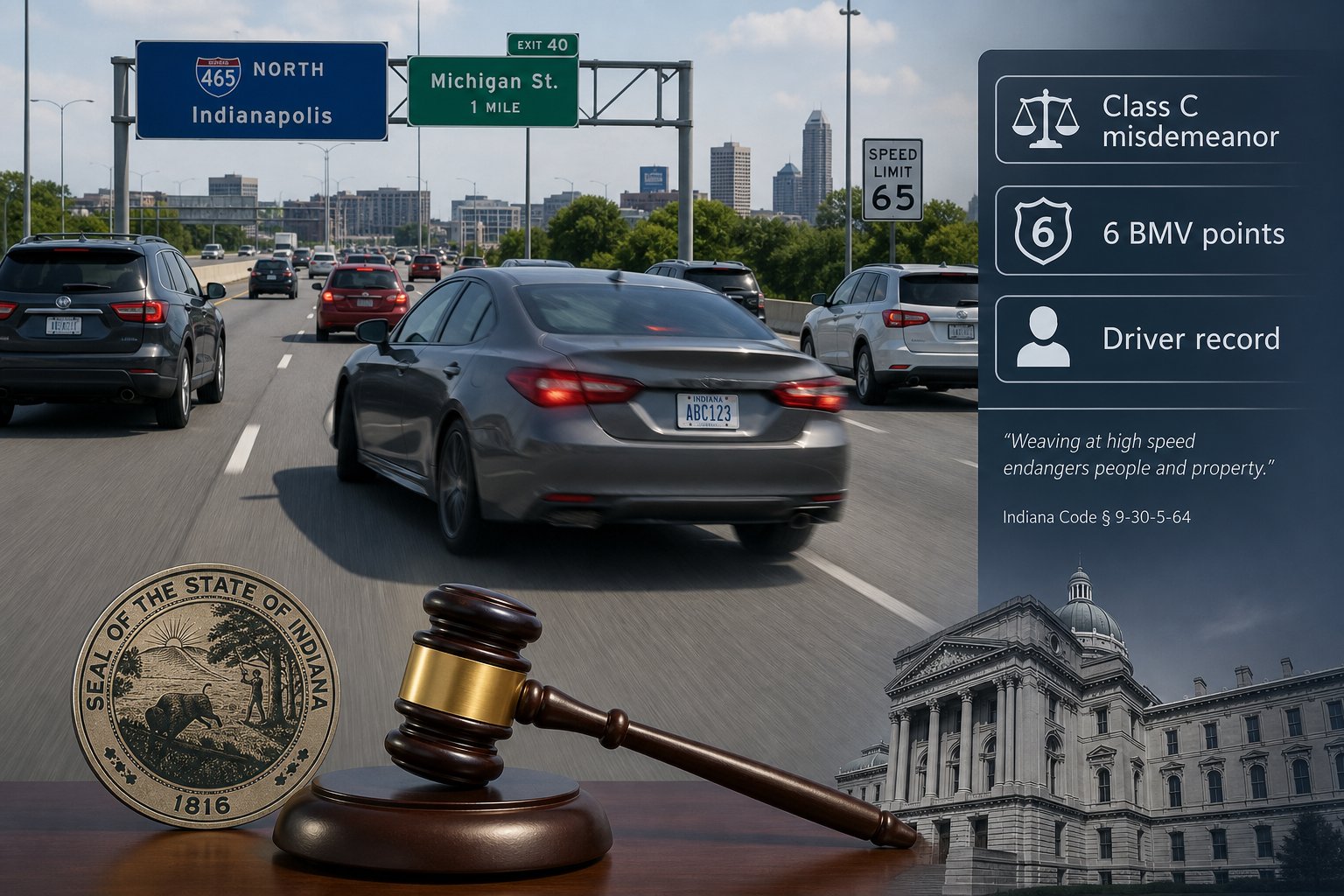
Indiana law treats reckless driving as more than a simple moving ticket. It is a crime, and the main rule appears in IC 9-21-8-52. In plain terms, reckless driving means driving in a way that endangers people or property or unreasonably interferes with traffic.
That broad rule covers more than one type of conduct. A driver may be charged for driving at an unreasonably high rate of speed under the circumstances, weaving through traffic, or acting with clear disregard for safety. The exact facts matter a lot. A prosecutor and court will look at what happened, where it happened, who was put at risk, and whether there was damage or injury.
In the most basic form, reckless driving is a Class C misdemeanor in Indiana. That is the starting point for many cases. But it does not stay there if the incident caused more harm.
For your driving record, the Indiana Bureau of Motor Vehicles treats reckless driving seriously. Under the Indiana BMV point system, a reckless driving conviction generally adds 6 demerit points. You can review the state’s point rules and suspension framework through the Indiana BMV and the Indiana Administrative Code.
That matters because reckless driving is not just about a fine. It can affect your license, court case, and record at the same time.
When Reckless Driving Becomes A Felony In Indiana
So, is reckless driving a felony in Indiana? Sometimes yes. The short answer is that basic reckless driving is usually not a felony, but some cases can rise to felony level when the conduct causes serious harm.
Indiana law draws the line based on the result of the driving and, in some cases, the setting. A key example is passing a stopped school bus with its stop arm extended. If a driver does that recklessly and causes injury, the charge can become a Level 6 felony. If that conduct causes death, it can become a Level 5 felony. Those rules appear in the same reckless driving statute at IC 9-21-8-52.
Before a case reaches felony level, there are lower steps too:
- Class C misdemeanor: basic reckless driving
- Class B misdemeanor: reckless driving that causes property damage
- Class A misdemeanor: reckless driving that causes bodily injury
- Level 6 felony: certain serious injury cases, especially involving a stopped school bus
- Level 5 felony: certain death cases, especially involving a stopped school bus
This is why the facts are so important. The same driving act can lead to very different charges depending on whether no one was hurt, property was damaged, or someone suffered a serious injury.
And the points issue can differ from the criminal level. A standard reckless driving conviction is generally listed at 6 points by the Indiana BMV, but court orders, license status, and case details can still affect your overall consequences.
Common Behaviors That Can Lead To A Reckless Driving Charge
A reckless driving charge often starts with conduct that puts other people at risk. It does not always require a crash. If your driving shows a serious lack of care, you can still be charged.
Common examples include:
- Excessive speeding or driving at an unreasonably high rate of speed
- Racing or rapid acceleration in traffic
- Unsafe lane changes or weaving between cars
- Tailgating at a dangerous distance
- Passing a stopped school bus with the stop arm out
- Driving in a way that endangers people or property
- Driving in a way that blocks or disrupts traffic flow
Context matters. Going fast on an empty road and going fast near a school zone are not viewed the same way. Weather, traffic, road design, and visibility can all shape whether police or prosecutors view conduct as reckless.
School bus cases stand out because Indiana law gives them special weight. If children are loading or unloading, the risk is obvious and high. That is one reason those cases can move from misdemeanor charges to felony charges when injury or death results.
Not every aggressive move becomes a reckless driving case. Still, if an officer believes your driving endangered others, you may face both a court case and BMV consequences. If your citation mentions reckless driving, read it closely and follow every listed deadline.
Penalties Beyond Felony Charges: Misdemeanors, Jail, Fines, And License Consequences
Even when reckless driving does not become a felony, the penalties can still be serious. Indiana treats the offense as criminal, not just a routine traffic matter.
Typical charge levels include:
- Class C misdemeanor: up to 60 days in jail and up to $500 fine
- Class B misdemeanor: up to 180 days in jail and up to $1,000 fine
- Class A misdemeanor: up to 1 year in jail and up to $5,000 fine
- Level 6 felony: 6 months to 2.5 years and up to $10,000 fine
- Level 5 felony: 1 to 6 years and up to $10,000 fine
Those are the broad statutory ranges commonly cited for these charge levels. Courts do not impose the same outcome in every case. The result can depend on the ticket, crash facts, injuries, your prior record, and the judge.
Then there is the license side. The court or the Indiana BMV may suspend driving privileges for up to one year in some reckless driving cases. A reckless driving conviction is also treated as a major violation. Multiple major offenses within ten years can create much larger problems under Indiana’s habitual traffic violator rules.
If a court, attorney, or BMV notice points you toward education, Indiana’s official course is the BMV-approved Driver Safety Program (DSP). It is a 4-hour course. The DSP may help in some situations because it gives a 4-point credit on your Indiana driving record, but it does not erase the conviction or remove the violation.
Requirements can depend on your BMV notice, court order, citation, driver record, license status, court, judge, and case facts.
What To Do After A Reckless Driving Charge Or Crash
First, read every paper you received. That includes the ticket, any court notice, and any Indiana BMV mail. Missing a deadline can make things worse.
Next, write down what happened while it is still fresh. Keep your notes simple and factual. Include the time, road, weather, traffic, and anything said at the scene.
It also helps to gather basic records:
- Your citation or ticket
- Any crash report number
- Insurance information
- Photos, if you have them
- Names of witnesses
- Prior court or BMV notices tied to your license
Be careful about what you say after the event. Do not post about the crash or charge on social media. Do not assume a reckless driving charge is just a normal speeding ticket.
Because reckless driving can be a crime in Indiana, many drivers speak with a qualified Indiana traffic or criminal lawyer as soon as possible. That is especially true if the case involves injury, a school bus, a crash, or a required court appearance.
If you were told to complete a driver course, make sure it is the right one and from an approved provider. For Indiana, the relevant state course is the Driver Safety Program. If you need a flexible online option, you can review the Indiana Driver Safety Program at Driving Logic and confirm that it matches your notice or order before you enroll.
How A Reckless Driving Conviction Can Affect Your Record, Insurance, And Driving Privileges
A reckless driving conviction can follow you in more than one way. It is not only about the day in court.
First, it can create a criminal record. That alone makes reckless driving different from many ordinary traffic infractions. If you apply for some jobs, professional licenses, or background-checked roles, that record may matter.
Second, it can affect your Indiana BMV record. Indiana lists reckless driving as a 6-point violation on its point schedule. You can see the current rules through the Indiana BMV point system page. Points can raise the risk of warnings, required action, or suspension, especially if you already have other violations.
Third, insurers often view reckless driving as a serious risk marker. That can lead to higher premiums or fewer coverage options at renewal. No one can promise how any one insurer will react, but the offense is generally worse than a minor moving violation.
For some drivers, the Driver Safety Program becomes part of the picture. The Indiana BMV describes the DSP through its driver improvement materials, and the course is 4 hours. A completed DSP can earn a 4-point credit, which lowers your point total. It does not delete the conviction.
If your notice, court, or lawyer says a course may help, check the exact requirement and use an approved option such as Driving Logic.
FAQ
Is reckless driving always a felony in Indiana?
No. Basic reckless driving is usually a misdemeanor. Felony-level cases are tied to more serious facts, such as specific injury or death situations.
Can injury make reckless driving more serious?
Yes. Property damage, bodily injury, serious injury, or death can change the charge level. Read the exact charge and court paperwork.
Does DSP reduce a felony reckless-driving charge?
No. DSP does not reduce or erase a felony charge. It may affect BMV point credit only when Indiana rules allow.
Should I get legal advice for felony allegations?
A felony allegation is serious. This article is general information, and you should consider speaking with a qualified Indiana attorney.
Conclusion
Is Reckless Driving a Felony in Indiana? What to Know depends on the exact Indiana charge, court paperwork, and BMV record impact. The Indiana Driver Safety Program may provide a 4-point credit when eligible, but it does not erase reckless driving, dismiss a charge, or guarantee a court result. Check your citation, court notice, and BMV record before deciding what to do next.
Take the Indiana Driver Safety Program course online when you are ready to begin.
Related Articles
- Reckless Driving in Indiana: Penalties, Points, and Driver Safety Options
- What Is Reckless Driving in Indiana? IC § 9-21-8-52 Explained
- What Speed Is Considered Reckless Driving in Indiana?
- Indiana Reckless Driving First Offense: What to Know
Sources
- Indiana BMV — Citation Points and Driver Safety Program
- Indiana BMV — Driver Record Points
- Indiana Code — Title 9 Motor Vehicles
- Indiana Code and Administrative Rules
Billy Forte is the owner of Driving Logic, a state-approved driver improvement course provider serving Indiana and other U.S. states. Driving Logic offers online driver safety and driver improvement courses for drivers handling BMV notices, court orders, and state requirements.
This article is general information, not legal advice. Indiana BMV rules, court orders, deadlines, provider reporting, insurance decisions, and case facts can differ. Use official Indiana BMV and court sources for current requirements, and consult a qualified Indiana attorney for legal guidance specific to your situation.