
Updated June 2026 · Reviewed by Billy Forte
Reckless driving in Indiana can bring criminal charges, BMV demerit points, and possible court action, and the Indiana BMV Driver Safety Program is a 4-hour BMV-approved course that may be required by a court order or BMV notice or taken early in some cases as a mitigation step before court. Some Indiana traffic attorneys suggest taking the course before the court date to show the judge you took the ticket seriously, but it does not guarantee dismissal or a reduced charge and it does not remove the violation from your driving record. If you complete the program on time, you can earn a 4-point credit on your Indiana driving record regardless of the court outcome, but your exact duty can depend on the ticket, court, judge, BMV notice, completion deadline, driver record, license status, and case facts.
This article covers Indiana requirements only.
Key Facts
- Reckless driving: Reckless driving is a serious Indiana traffic offense and may involve court consequences.
- DSP role: A DSP may help with safer driving education or a court requirement, but it is not a legal defense.
- No guarantee: The course does not guarantee dismissal, reduction, or license reinstatement.
- 4-point credit: A BMV-approved DSP may add a 4-point credit when eligible.
- Court controls: Your judge, court order, and case facts control what the course can satisfy.
What Counts As Reckless Driving In Indiana
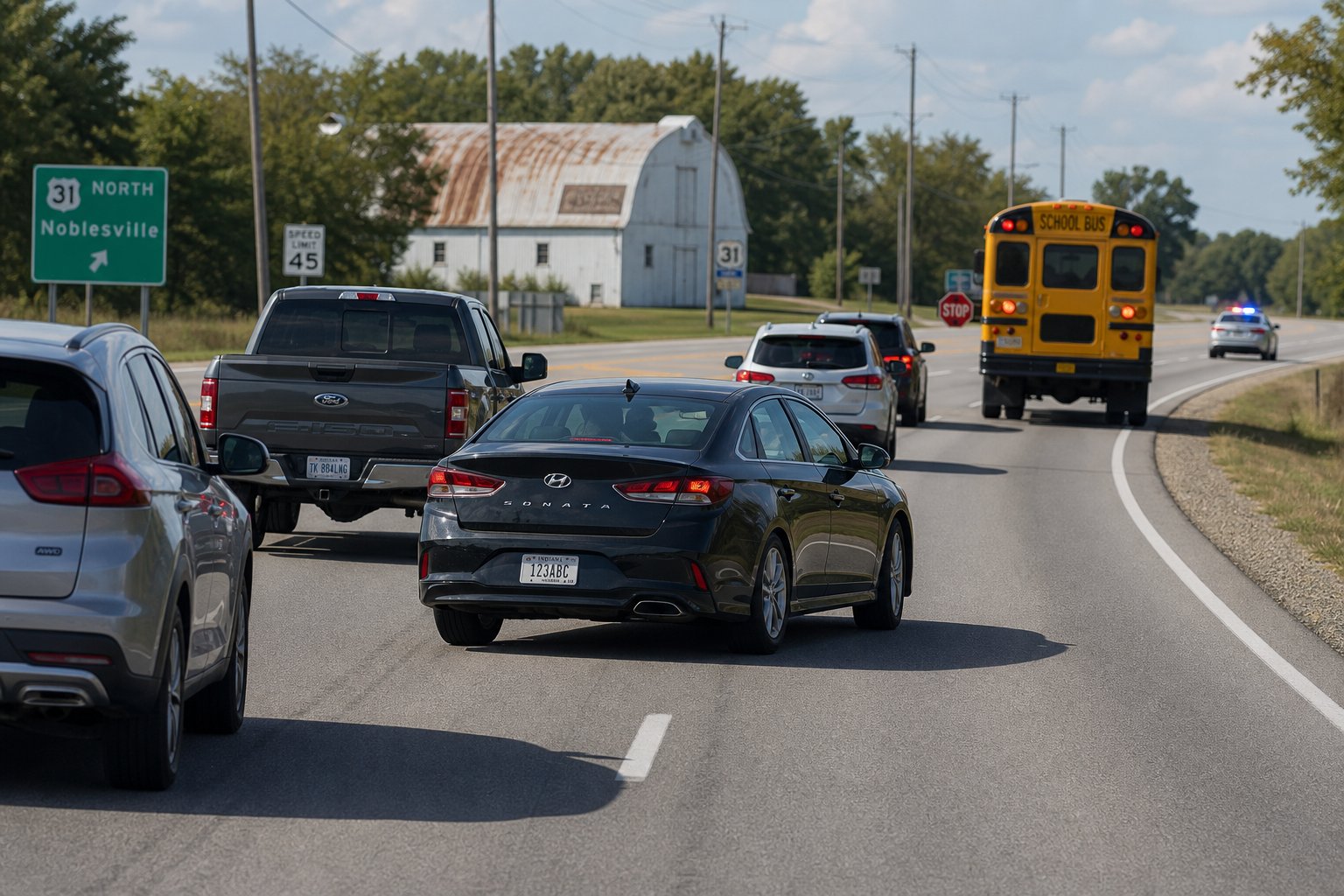
If this fits your notice or court order, you can start the reckless driving indiana after confirming your deadline and provider requirements. Indiana reckless driving is defined by state law, mainly under Indiana Code 9-21-8-52. The key idea is simple: the driving must create danger or block traffic in a way the law treats as reckless.
A person may be charged if they drive at an unreasonably high or low speed that endangers people or property or obstructs traffic. The law also covers certain passing and lane movement acts that are dangerous by nature.
That matters because many drivers think reckless driving only means extreme speeding. In Indiana, the charge can also come from how you move around other cars, where you pass, or whether you interfere with normal traffic flow.
Common Examples Such As Speeding, Weaving, Unsafe Passing, And Blocking Traffic
Common examples include:
- Speeding so fast that it puts others at risk
- Driving too slowly in a way that blocks traffic
- Weaving in and out of a line of traffic when not allowed
- Unsafe passing on a hill or curve with less than 500 feet of clear view
- Speeding up while another driver is trying to pass
- Refusing to give half the roadway to a passing driver
- Passing a stopped school bus with its arm or signals extended
Those examples come from the statute itself and related Indiana driving rules. So, the issue is not only your speed. The issue is whether your conduct created risk, blocked traffic, or ignored a rule tied to safe passing.
The Indiana Bureau of Motor Vehicles also treats reckless driving as a serious offense on a driver record. A conviction can lead to 6 demerit points under the Indiana BMV point system, as shown in the BMV point schedule and related materials from the Indiana BMV.
If you got a citation that mentions reckless driving, read the exact wording on the ticket. Then compare it to the statute and any court notice. The exact facts matter.
Reckless Driving Vs. Aggressive Driving And Road Rage
These terms sound alike, but Indiana does not treat them as the same thing.
Reckless driving focuses on dangerous driving behavior. The question is whether the conduct itself endangered people or property or blocked traffic.
Aggressive driving is different. Under Indiana Code 9-21-8-55, it generally involves an intent to harass or intimidate another person while committing one or more listed traffic acts. That extra intent element is a big difference.
Examples tied to aggressive driving may include:
- Following too closely
- Unsafe stopping or slowing
- Failing to yield
- Repeated horn use or flashing lights to intimidate
- Running a light in a hostile interaction
So, if a driver is weaving through traffic at high speed, that may support a reckless driving charge even without proof the driver wanted to scare someone. But if the facts show the driver meant to threaten or harass another person, aggressive driving may also come into play.
Road rage is more of a common phrase than a stand-alone Indiana traffic charge. It can describe extreme anger behind the wheel. Depending on what happened, road rage conduct may lead to charges such as reckless driving, aggressive driving, battery, intimidation, or other offenses.
This distinction matters if you are trying to understand a ticket or court filing. The words people use after a traffic stop are not always the same as the legal charge. Your citation, court paperwork, and driver record will control.
If a court order or BMV notice requires a Driver Safety Program, follow the exact terms. And if an attorney tells you to consider taking a BMV-approved course before court, ask how that fits your specific charge, since course completion does not erase the allegation itself.
Penalties, License Consequences, And When Charges Can Become More Serious
A reckless driving charge in Indiana can be more serious than many drivers expect. It is not just a normal moving ticket.
Under Indiana law, the base offense is often a Class C misdemeanor. That can mean up to 60 days in jail and up to a $500 fine. If the event caused property damage, the charge may rise to a Class B misdemeanor, with up to 180 days in jail and up to a $1,000 fine.
If the conduct caused bodily injury, or involved recklessly passing a stopped school bus, the case may become a Class A misdemeanor, with up to 1 year in jail and up to a $5,000 fine. In the most serious school bus cases, the charge can rise to a felony. You can review the statute directly at Indiana Code 9-21-8-52.
Then there is the license side. The Indiana BMV assigns 6 demerit points for reckless driving. Indiana also treats reckless driving as a major offense in many licensing contexts. Depending on your record, the court and BMV may take added action, including a possible recommendation or order affecting your driving privileges.
This is where the Driver Safety Program often comes up. Indiana’s official DSP is a 4-hour BMV-approved course. In some situations, you may receive a BMV notice or court order to complete it by a stated completion deadline. Some Indiana traffic attorneys also suggest taking it voluntarily before the court date as a mitigation step.
That can signal a few things to the court:
- You took the charge seriously
- You completed driver education without delay
- You are trying to lower future risk
But there are limits. A completed DSP does not guarantee dismissal. It does not guarantee a charge reduction. And it does not remove the charge or conviction from your driving record.
What it can do is earn a 4-point credit on your Indiana driver record when completed and processed. That point credit is separate from what the court does with the case. It matters, but it is not the same as wiping out the violation.
If your charge involves injury, a crash, prior major offenses, license issues, or a pending court appearance, it is smart to consult an Indiana traffic attorney before you enroll voluntarily.
What To Do After A Reckless Driving Stop Or Crash In Indiana
If an officer stops you for reckless driving in Indiana, your first job is safety and compliance. Pull over safely, keep your hands visible, and provide your license, registration, and insurance when asked.
Stay calm. Do not argue on the roadside. A traffic stop is not the place to fight the charge.
If you receive a citation, read it closely after the stop. Check:
- The exact charge listed
- Your court date, if any
- Whether the ticket names a required appearance
- Any instructions tied to a court or county process
If there was a crash, take the steps that protect health and help preserve facts. Call 911 if anyone may be hurt or if the crash needs to be reported. Move to safety if you can do so without more risk.
Then try to gather basic information:
- Photos of the scene, damage, and road conditions
- Names and contact details for witnesses
- The other driver’s insurance and vehicle details
- The officer’s name and report information, if available
Also seek medical care if you may be injured. Some injuries do not show up right away.
Next, pay close attention to all paperwork. Your duties may depend on a ticket/citation, a court order, or a BMV notice. Those documents can set a 90-day window or another stated completion deadline for a required course. Do not ignore any required court appearance or filing date.
If a judge orders the Driver Safety Program, you must follow the exact order. Taking a random driving class will not always count. The course usually needs to be a BMV-approved course.
And if you are thinking about taking the DSP before court on your own, ask first whether that makes sense in your case. Some attorneys suggest it as mitigation, but timing matters when facts are disputed or when the court has not yet given instructions.
How To Reduce Future Risk With Safer Driving Habits And State-Required Courses
The best way to lower the risk of another reckless driving problem is to change the habits that lead to it. Small driving choices matter more than most people think.
Start with the basics:
- Keep a safe speed for traffic and weather
- Leave more following distance
- Avoid sudden lane changes
- Do not pass on blind hills or curves
- Never pass a stopped school bus with signals on
- Put your phone away while driving
- Let angry drivers go around you
These habits help because Indiana reckless driving law often turns on conduct that creates danger in plain view. Safer choices reduce both crash risk and the chance of a citation.
State-required courses can also play a role. The Indiana BMV recognizes a Driver Safety Program that is 4 hours long and must come from an approved provider. If the BMV or a court requires the course, follow the exact directions in the notice or order, including the deadline and any proof-of-completion rule. You can review official BMV materials through the Indiana Bureau of Motor Vehicles.
For some drivers, the DSP also makes sense as a proactive step. Again, it does not erase a reckless driving case. But if it is accepted in your situation, it may show responsibility and earn the 4-point credit once completed.
If you need a flexible online option, Driving Logic offers the Indiana Driver Safety Program in a format built for busy schedules on phones, tablets, or computers. You can review the course details and start the Indiana Driver Safety Program online at Driving Logic.
Requirements can depend on your Indiana BMV notice, court order, driver record, license status, judge, and case facts.
This information is general only and is not legal advice.
Drivers may search for this topic using terms like driver safety program reckless driving indiana, voluntary dsp before reckless driving court indiana, defensive driving reckless driving indiana. In practice, the key issue is still the same: match the course to the Indiana BMV notice, court order, or record goal before you rely on it.
FAQ
Can the Indiana DSP help after reckless driving?
It can help with driver safety education or a court/BMV requirement, but it is not a legal defense. A judge, court order, or BMV notice controls what the course can satisfy.
Does DSP dismiss a reckless driving charge?
No. DSP completion does not guarantee dismissal or reduction. Reckless driving questions should be handled through the court process or a qualified attorney.
Can I take DSP before court?
You can take a BMV-approved DSP voluntarily, but that does not guarantee a court outcome. Follow your attorney’s advice or the court’s instructions if you have a pending case.
Does reckless driving add points in Indiana?
Moving violations can carry point values under Indiana’s point system. Check official BMV point resources for the current point value tied to your conviction.
Conclusion
Indiana Reckless Driving and the Driver Safety Program: What to Know comes down to the rule in your own Indiana BMV notice, court order, citation, or driver record goal. The Indiana Driver Safety Program can help with BMV compliance and may add a 4-point credit when eligible, but it does not erase the ticket or conviction. Confirm your deadline, choose a BMV-approved provider, and keep proof after you finish.
Take the reckless driving indiana online with Driving Logic when you are ready to begin.
Related Articles
- Indiana Driver Safety Program: The Complete Guide
- Can I Take the Indiana Driver Safety Program Online If It’s Court-Ordered?
- Court-Ordered Driver Safety Program in Indiana: What to Do
- BMV-Ordered Driver Safety Program in Indiana: Points, Notice, and 90-Day Deadline
Sources
- Indiana BMV — Citation Points and Driver Safety Program
- myBMV — Indiana BMV Online Services
- Indiana Code
- Indiana Administrative Code
Billy Forte is the owner of Driving Logic, a state-approved driver improvement course provider serving Indiana and other U.S. states. Driving Logic offers online driver safety and driver improvement courses for drivers handling BMV notices, court orders, and state requirements.
This article is general information, not legal advice. Indiana BMV rules, court orders, deadlines, provider reporting, insurance decisions, and case facts can differ. Use official Indiana BMV and court sources for current requirements, and consult a qualified Indiana attorney for legal guidance specific to your situation.