
Updated June 2026 · Reviewed by Billy Forte
Impact Texas Young Drivers (ITYD) has been discontinued, so the two current Impact Texas Drivers courses are ITTD for teens 15 to 17 and ITAD for adults 18 and older. If you are searching for ITYD as an adult, the course you actually need now is Impact Texas Adult Drivers (ITAD), the free one-hour DPS video. Teens take the two-hour ITTD instead, so the right choice comes down to your age and the type of driver education you completed.
Applies to first-time Texas driver licensing. Requirements are set by the Texas DPS (and TDLR for driver education) and can change.
Key Facts
- ITYD is discontinued: The old Impact Texas Young Drivers program was folded into ITAD.
- Adults 18+ take ITAD: The free, ~1-hour DPS video, including former ITYD-age drivers 18–24.
- Teens 15–17 take ITTD: The teen version runs about two hours.
- Same purpose: All Impact courses cover distracted-driving awareness and end in a 90-day certificate.
- Pick by age and course: Your age and driver-education path decide whether you take ITTD or ITAD.
What The Impact Texas Drivers Program Is And Why It Matters
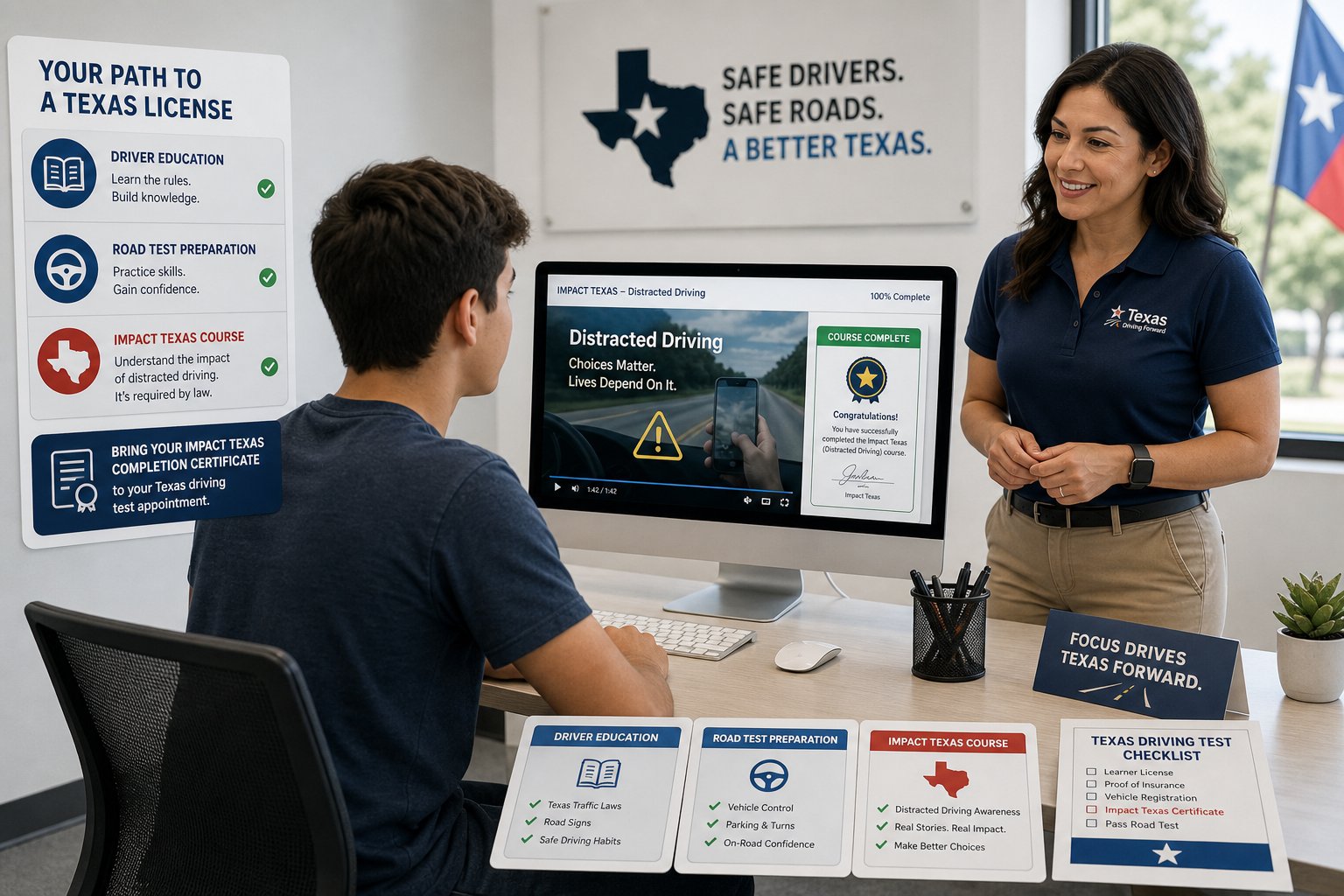
The Impact Texas Drivers program is a Texas DPS distracted-driving course built around short video lessons and real crash stories. Its job is simple: show how phone use and other distractions can lead to serious wrecks, injuries, and deaths.
That matters because this is not an optional video. If Texas DPS requires an ITD course for your license path, you must finish it and bring the certificate to your driving test appointment. Without that certificate, you can be turned away and forced to reschedule.
A lot of people mix this up with driver education. They are different.
- Adult Driver Education (ADE) is the state-required class for many first-time adult drivers ages 18 to 24
- ITAD is the separate free TxDPS video course
- Defensive driving/Driver Safety Course (DSC) is a different class used for ticket dismissal in some cases
Those are three different things.
For adults, the big rule is this: if you are 18 or older and getting your first Texas license, the Impact Texas course tied to your road test is Impact Texas Adult Drivers (ITAD), not ITTD. And if you are 18 to 24, you also need a TDLR-approved adult drivers ed course.
One more key point: completing Adult Driver Education can waive the DPS written knowledge test, which is a major benefit for first-time drivers. You can review approved school information through the Texas Department of Licensing and Regulation and licensing details through Texas DPS.
Which Impact Texas Course You Need — And Why ITYD Is Discontinued
This is where many people get confused, especially because impact texas young drivers (ityd) is still searched online. In current Texas DPS practice, the active versions you need to focus on are ITTD and ITAD.
Here is the simple breakdown:
- Ages 15 to 17: take Impact Texas Teen Drivers (ITTD)
- Ages 18 to 24 getting a first license: take Impact Texas Adult Drivers (ITAD) and complete Adult Driver Education
- Ages 25 and older getting a first license: take ITAD
So where does ITYD fit? In most current Texas licensing paths, it does not. It is an older label people still use, but adults should not go looking for a separate “young drivers” course if Texas DPS is directing them to ITAD.
That is the answer most adult applicants need: adults 18+ should use ITAD specifically.
If you are 18 to 24, do not stop after the 1-hour ITAD video. You still need the ADE course from a licensed provider. At Driving Logic, you can take the Texas adult drivers ed course online in a format built for busy schedules. That can help you complete the state education requirement and move toward the next step faster.
And no, adults 18+ do not need a learner permit first in Texas before getting a driver license. That surprises a lot of people, but it is an important part of the adult first-license process.
ITYD Vs. ITTD Vs. ITAD: The Key Differences To Know
The names are close, but the courses are not the same.
ITYD
Impact Texas Young Drivers (ITYD) is an older course name that still appears in searches and older pages. If you are trying to figure out what adults need now, this older term usually points you toward the current adult version, which is ITAD.
ITTD
Impact Texas Teen Drivers (ITTD) is for teen applicants, usually ages 15 to 17. It is the teen-focused version of the distracted-driving program and is generally about 2 hours long.
ITAD
Impact Texas Adult Drivers (ITAD) is the current free course for adult first-time drivers. It is usually a 1-hour course on the official DPS system.
Here is the quick comparison:
- ITTD = teen applicants 15 to 17
- ITAD = adults 18+
- ITYD = older term, not the one most current applicants should rely on
The biggest mistake is assuming “young drivers” means “young adults,” then picking the wrong course. If you are an adult, Texas DPS wants you in ITAD.
Also remember that impact texas teen drivers is not interchangeable with the adult version. A teen course certificate does not replace an adult course certificate, and an adult course certificate does not replace a teen one.
When To Take ITAD In The Licensing Process
Timing matters a lot with the Impact Texas family of courses.
Texas DPS generally requires you to complete the correct ITD course after you finish your required driver education steps and within 90 days of your driving test. If you take it too early, your certificate can expire before your appointment.
For adults 18 to 24, the usual order looks like this:
- Complete the 6-hour Adult Driver Education course
- Finish other required license application steps
- Take ITAD on the DPS portal
- Print the certificate
- Take the driving test within the 90-day certificate window
For adults 25 and older, the path may be shorter because adult drivers ed is not always required, but the ITAD timing rule still matters if DPS requires it for your skills test.
This is also why people should be careful when searching for impact texas young drivers (ityd) instructions. Even if that term leads you to old information, the real question is not the label. The real question is: which current DPS course matches your age and license type, and when should you take it?
The safe answer for adults is to take ITAD close enough to your road test that the certificate stays valid. If your skills test is delayed beyond 90 days, you may have to take the course again.
How To Register, Complete The Course, And Get Your Certificate
The official place to take the Impact Texas course is the DPS website at impacttexasdrivers.dps.texas.gov. That is where you choose the correct version and create your account.
The process is usually straightforward:
- Go to the official ITD portal
- Select ITAD or ITTD based on your age and path
- Create an account or log in
- Watch all required video segments
- Complete any prompts at the required times
- Finish the course and get your certificate
For adult applicants, the key point is simple: choose ITAD.
After completion, DPS provides an ITAD certificate or the matching ITD completion certificate for your version. In practice, you should print it and bring the printed copy to your driving test appointment, even if you also keep a digital copy for backup.
Before you start, make sure your name and course details match your license application records. Small mismatches can create avoidable delays.
If you are ages 18 to 24 and still need your education course, you can complete your Texas Adult Driver Education with Driving Logic. That is separate from ITAD, but it is a required step for many adult first-time drivers, and it can also help you qualify for the ADE-1317 certificate that supports the knowledge test waiver benefit.
How Long ITAD Takes, What It Costs, And When The Certificate Expires
For most current Texas applicants, the real comparison is between ITTD and ITAD.
Here are the basic facts:
- ITAD: about 1 hour
- ITTD: about 2 hours
- Cost: free through Texas DPS
- Certificate validity: 90 days
That 90-day rule is one of the most important details in the whole process. If your certificate expires before your driving test, Texas DPS can require you to retake the course.
This is another reason the older impact texas young drivers (ityd) term causes confusion. People may think there is a separate course with separate timing rules. For most current applicants, there is not. What matters is that you take the correct active course and use the certificate before it expires.
Adults often like ITAD because it is short. The problem is that some people treat that as the whole licensing requirement. It is not. If you are 18 to 24, the 1-hour course is only one part of the process. You still need the separate Adult Driver Education course from a provider approved under the Texas Department of Licensing and Regulation.
If you are not sure whether your certificate is still valid, check your completion date before your appointment.
Common Mistakes That Can Delay Your Texas License
Most delays come from a few repeat mistakes.
Taking the wrong course
Adults sometimes sign up for impact texas teen drivers because the names look similar. If you are 18 or older, you usually need ITAD, not ITTD.
Mixing up ITAD and adult drivers ed
This is a big one. ITAD is not Adult Driver Education. For ages 18 to 24, both may be required. One is a free DPS video. The other is the state-required education course.
Taking ITAD too early
If you complete the course long before your driving test, the certificate may expire after 90 days.
Forgetting the printed certificate
Bring the printed certificate to the skills test. Do not assume a phone screenshot will be enough.
Missing the ADE benefit
If you are 18 to 24, completing ADE can waive the written knowledge test. That can save time and remove one more hurdle.
Assuming you need a learner permit first
Adults 18+ do not need a learner permit before getting a first Texas driver license.
If you want the smoothest path, check your steps on the official Texas DPS site, use the official Impact Texas portal, and complete your required adult education through a provider such as Driving Logic. That gives you the best shot at showing up with the right course, the right certificate, and the right timing.
FAQ
Is Impact Texas Young Drivers (ITYD) still a course?
No. ITYD has been discontinued and merged into ITAD. Adults 18 and older — including the 18–24 group ITYD once served — now take ITAD.
What’s the difference between ITYD, ITTD, and ITAD?
ITYD is the discontinued older name. ITTD is the current teen course (ages 15–17, about two hours). ITAD is the current adult course (18+, about one hour).
I’m 18–24 — which course do I take?
ITAD. Drivers 18–24 take the one-hour ITAD along with the ADE course. The former ITYD program for this age group no longer exists.
Do teens and adults take the same Impact course?
No. Teens 15–17 take ITTD; adults 18+ take ITAD. A teen certificate does not substitute for the adult one, or vice versa.
Conclusion
The short version is that the “young drivers” course is a thing of the past: ITYD is gone, and Texas now runs just two Impact tracks — ITTD for teens and ITAD for adults. If you are 18 or older, stop looking for a separate young-drivers video and take ITAD. Matching the course to your age is all this really requires once you know ITYD has been retired.
Whichever Impact video applies, drivers 18–24 also need the separate, paid Texas adult driver education course online, which waives the DPS written test.
Related Articles
- What Is Impact Texas Adult Drivers (ITAD)? The Complete Guide
- ITAD vs ADE: What Is the Difference Between Impact Texas Adult Drivers and Adult Driver Education?
- How to Complete the Impact Texas Adult Drivers (ITAD) Course
- Impact Texas Drivers: The Complete Overview of All IMPACT Programs
Sources
Billy Forte is the owner of Driving Logic, a TDLR-approved Texas adult driver education and driver safety course provider. Driving Logic offers the online Texas Adult Driver Education (ADE) course that helps adults qualify for a first Texas driver license and waive the DPS written knowledge test.
This article is general information about Texas adult driver licensing, not legal advice. Requirements, fees, and procedures are set by TDLR and the Texas DPS and can change, so confirm current details with official Texas sources before you enroll or visit a DPS office.