
Updated June 2026 · Reviewed by Billy Forte
Texas CDL holders generally cannot use the Driver Safety Course to dismiss a traffic violation, because federal FMCSA rules prohibit “masking” commercial-driver convictions, and Texas follows that prohibition. This applies to violations in a commercial vehicle, and CDL holders face tighter limits even for tickets in a personal vehicle, so a commercial driver should confirm with the court and consider legal advice before assuming dismissal is available. The course can still serve as a genuine safety refresher, but for a CDL holder it does not remove a qualifying violation from the record the way it can for a non-commercial driver.
Applies to Texas. Court rules and deadlines vary by county.
Key Facts
- Federal masking ban: FMCSA rules bar dismissing (masking) CDL convictions, and Texas enforces this.
- Commercial-vehicle violations: Cannot be dismissed via the Driver Safety Course.
- CDL holders limited even in a personal vehicle: Eligibility is narrower than for non-commercial drivers — confirm with the court.
- No record removal for CDL convictions: Completing a course does not erase a qualifying CDL violation.
- Get advice: Because a CDL is a livelihood, consider speaking with a Texas attorney about your specific ticket.
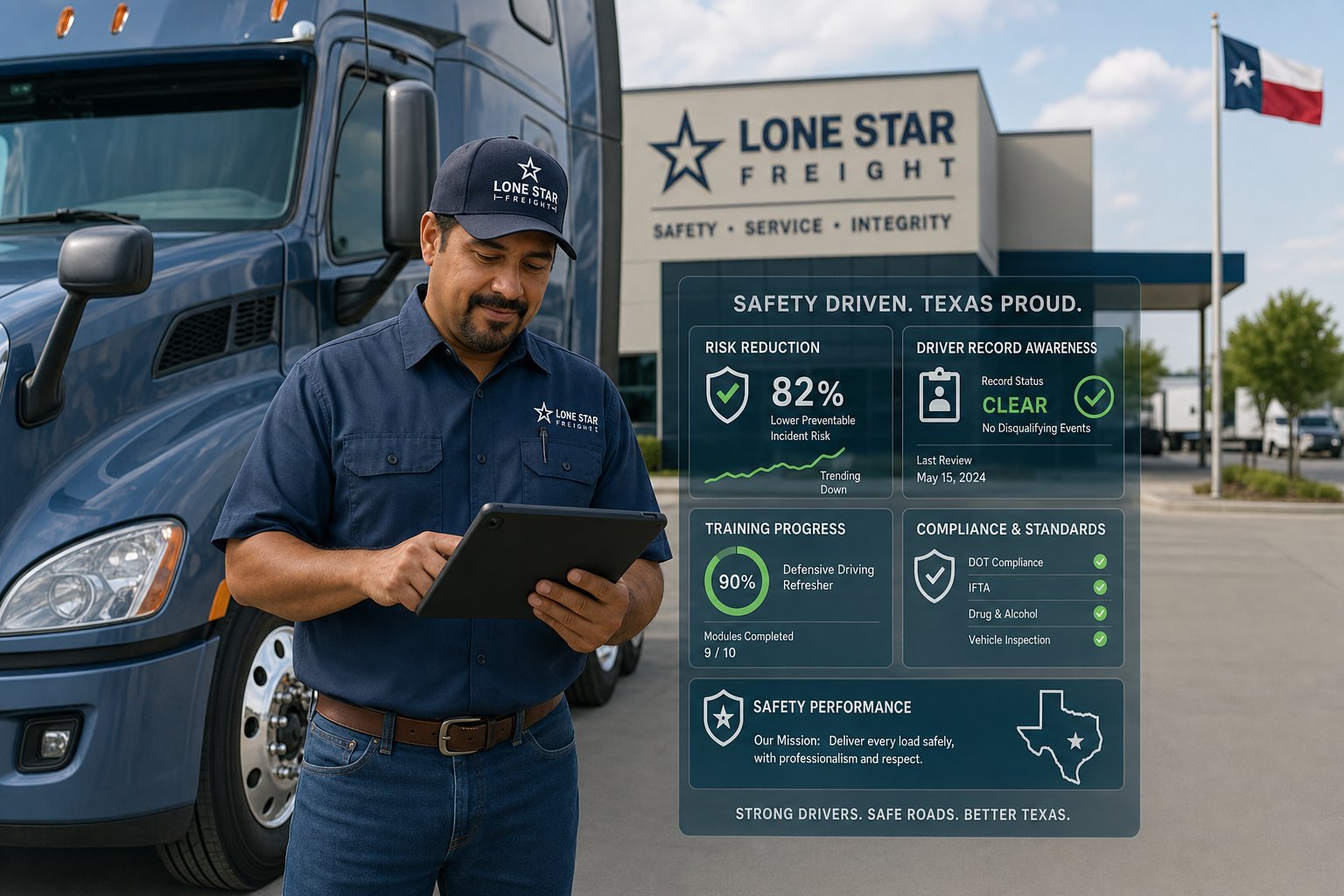
Why Defensive Driving Matters For Texas CDL Holders
Defensive driving still matters for CDL holders in Texas. It just does not work as a ticket dismissal tool for most commercial drivers.
That point trips people up. Many drivers hear “defensive driving” and think of one thing: getting a ticket dismissed. But for CDL holders, the value is different. The course can support safer habits, lower risk on the road, and show a good-faith effort to improve after a citation or incident.
For Texas drivers, the class used for ticket dismissal is the same program often called the Driver Safety Course (DSC). In plain terms, defensive driving and Driver Safety Course mean the same TDLR-approved 6-hour course in Texas. The approval comes from the Texas Department of Licensing and Regulation, not Texas DPS and not TxDMV.
Why does this matter if a CDL holder cannot use it for citation dismissal? Because a moving violation can hurt more when you drive for a living. Even one conviction may affect:
- your employer’s review of your record
- your insurance profile
- your job options
- internal fleet safety status
- future training requirements
And the stakes are higher in a commercial vehicle. Federal safety rules do not allow states or courts to mask CDL violations in ways that hide them from the driver record. That is a big reason CDL ticket cases need extra care.
So yes, the course still has value. It may help with safety, employer expectations, or retraining. But it is not the same as getting a Texas ticket dismissed when you hold a CDL.
Who Qualifies For A Texas Defensive Driving Course
Most Texas drivers who use a Driver Safety Course for ticket dismissal must meet basic court and statute rules. CDL holders usually do not.
Under Texas Code of Criminal Procedure Art. 45.0511, courts may allow eligible drivers to take a driving safety course to seek dismissal of certain moving violations. But the common starting point is that the driver must hold a valid Texas non-commercial license.
For a typical non-CDL case, courts often require:
- a valid Texas driver license
- current liability insurance
- a request made before the appearance date on the citation
- court approval before taking the course
- an eligible moving violation
- later submission of the completion certificate and a Type 3A driving record
The court controls the process. You do not just take a class on your own and expect it to count. You must ask the court first, and the court must approve the request.
Texas courts also often require a plea of guilty or no contest as part of the request. After that, if the court grants the option, the driver gets a deadline to finish the course and return the documents.
For readers trying to sort out agency names: TDLR approves the course provider, while Texas DPS handles driver records and licensing functions. Those are different jobs, and mixing them up can lead to wrong assumptions about what counts.
When CDL Drivers May Not Be Eligible
For ticket dismissal in Texas, CDL drivers are generally not eligible for the Driver Safety Course.
That applies because Texas rules and federal CDL rules do not work the same way as they do for standard Class C drivers. Federal FMCSA policy bars masking commercial driver violations. Texas courts also treat CDL status as disqualifying for DSC dismissal requests.
Just as important, this problem is not limited to a big-rig ticket. Texas courts often state that if you held a CDL at the time of the offense or at the time of the request, the case is not eligible for DSC dismissal. In other words, having the ticket happen in a personal vehicle does not automatically fix the issue.
That is why a CDL holder should not assume a normal defensive driving option applies. Before you pay a moving ticket, check the citation, the court rules, and the case details carefully. Paying can operate like a conviction in many cases, and that may have permanent CDL consequences.
How To Get Court Approval And Meet Texas Requirements
Court approval must come first. In Texas, you must request the Driver Safety Course before the appearance date on the citation.
This rule matters for every driver who may be eligible. If you miss that date, the court may deny the request even in a normal non-CDL case. So the first step is always with the court, not with the course provider.
For eligible non-CDL drivers, the process often looks like this:
- Review the citation for the appearance date.
- Contact the court before that date.
- Ask for the Driver Safety Course or defensive driving option.
- Submit the court’s required form and documents.
- Pay any court costs or fees the court requires.
- Wait for court approval.
Courts commonly ask for:
- a copy of your driver license
- proof of Texas liability insurance
- the court request form
- payment required by the court
After approval, the court usually gives instructions for what to file later. That often includes a TDLR-approved course completion certificate and a Type 3A driving record from Texas DPS.
For CDL holders, this same process is exactly why checking first matters. If you are not eligible, taking the class without court approval will not create a dismissal. It may still be useful as training, but it will not do the legal work people often expect.
If your citation involves a moving violation and you hold a CDL, use extra care before paying it. A payment may close the case, but it can also leave a record that follows your commercial driving status. That is one reason many CDL drivers choose to consult an attorney before paying any moving violation.
How The Course Works, Timelines, And The 12-Month Rule
In Texas, the dismissal course is a 6-hour TDLR-approved program, and courts often give about 90 days to finish it after approval.
Again, that timeline applies to drivers the court finds eligible. The class may be taken online through an approved provider, and many busy drivers prefer that format because they can stop and restart as needed.
The main timing points are simple:
- request the course before the appearance date
- wait for court approval
- finish the 6-hour course by the court deadline
- submit the completion certificate and Type 3A driving record by the court deadline
Many Texas courts use a 90-day deadline after approval, though the exact due date comes from the court handling the citation. Never guess on timing. Use the written court order or instructions.
Texas also has the 12-month rule. If a driver has already used a Driver Safety Course for ticket dismissal within the prior 12 months, the court generally cannot grant it again for another eligible citation.
For CDL holders, the timeline issue is different. The main problem is usually not course access. The problem is eligibility for dismissal. A CDL driver may be able to take a course for education, employer policy, or personal improvement. But that does not mean the court will dismiss the ticket.
If you are an eligible non-CDL reader looking for a fast option, Driving Logic offers a Texas-approved online course built for busy schedules and mobile access. Just make sure the court has approved the request before you start.
What CDL Drivers Learn And How Completion Affects Their Record
For CDL holders, a defensive driving course can help with safety knowledge, but it does not erase a ticket or hide a conviction from the CDL record.
That is the key takeaway. The course may still be useful, just not for citation dismissal.
CDL-focused training often covers the risks that matter most in daily work, including:
- space management and blind spots
- following distance and stopping distance
- hazard recognition and escape options
- work-zone and night driving risks
- weather, speed control, and traction
- fatigue, distraction, and impairment prevention
- legal duties and documentation habits
Those topics matter because commercial driving leaves less room for mistakes. A loaded vehicle needs more stopping distance. Lane changes take more planning. Bad weather turns small errors into major ones.
Still, completing training does not mean the state removes the violation from your CDL history. It does not let the court mask the case. And it does not guarantee any insurance result. In some situations, an employer or insurer may view course completion as proof of remedial training, but that depends on company policy and the facts of the case.
So what should a CDL holder do with this information? Treat any moving violation as important. Confirm what the court says about eligibility. Check your deadlines. And before you pay a ticket, think about the long-term record impact.
FAQ
Can a Texas CDL driver dismiss a ticket with defensive driving?
Generally no for commercial-vehicle violations, because federal FMCSA rules prohibit masking CDL convictions. CDL holders also face tighter limits for personal-vehicle tickets, so confirm with the court.
Why are CDL holders treated differently?
Federal regulations require commercial-driver convictions to appear on the record and bar states from dismissing them through diversion programs. This protects commercial-driving safety standards.
Can a CDL holder take the course at all?
Yes, voluntarily, as a safety refresher or where otherwise allowed, but it will not remove a qualifying violation from a commercial driver’s record.
Should I talk to a lawyer about a CDL ticket?
Often yes. Because a conviction can affect your CDL and employment, a Texas attorney can explain options that a Driver Safety Course cannot provide.
Conclusion
For CDL holders, the Driver Safety Course is mostly off the table as a dismissal tool: federal masking rules keep commercial-driver convictions on the record, and Texas follows them. Treat a CDL ticket as higher-stakes than an ordinary citation, confirm the limits with the court, and weigh legal advice before deciding. The course still has value as a refresher, but it will not protect a commercial record the way it protects a regular one.
If you are a non-commercial driver or taking the course voluntarily, you can complete a TDLR-approved Texas defensive driving course online — but CDL holders should confirm eligibility with the court first.
Related Articles
- Texas Defensive Driving for Ticket Dismissal: The Complete Guide
- What Texas Traffic Violations Qualify for Defensive Driving Dismissal?
- Texas Speeding Ticket for CDL Holders: Federal Rules and Higher Stakes
- Texas Driver Safety Course (DSC): The Complete Guide
Sources
Billy Forte is the owner of Driving Logic, a state-approved driver safety and defensive driving course provider serving Texas and other U.S. states. Driving Logic offers online driver safety, defensive driving, and traffic-ticket courses for drivers handling court, license, and insurance-related requirements.
This article is general information, not legal advice. Texas court rules, TDLR requirements, deadlines, eligibility, and case facts can differ by county and court. Use official Texas court and state sources for current requirements, and consult a qualified Texas attorney for legal guidance specific to your situation.