
Updated June 2026 · Reviewed by Billy Forte
A Florida traffic ticket usually means you must act within 30 days, and your main choices are to pay the fine, contest the ticket, or elect traffic school if you qualify: the cost, points, and school option depend on the citation, your speed, and the county or court handling the case. In many common speeding cases, paying counts as an admission and can add 3 points for speeds up to 15 mph over or 4 points for higher common speeding ranges, while traffic school may help you avoid points if the court allows it. If you miss the deadline or fail to follow the clerk or court instructions, the case can go into default and your license can be suspended, with extra fees needed to fix it.
This article covers Florida requirements only.
Key Facts
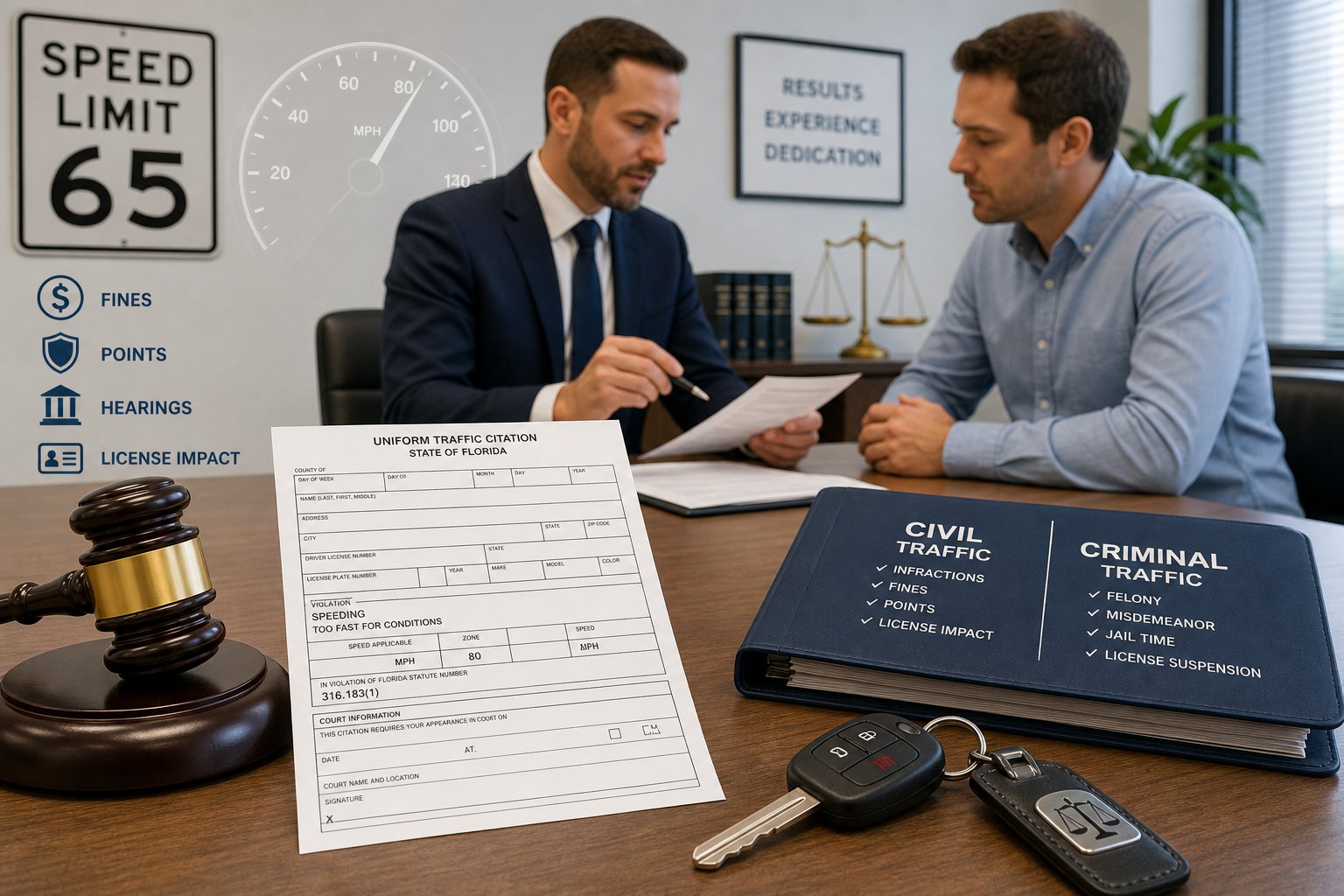
- Fine total: Base fine plus court costs and surcharges — often 2 to 3 times the stated fine amount
- Points: Most moving violations carry 3 or 4 points; careless driving with an accident carries 6 points
- Traffic school option: Withholds adjudication for eligible non-criminal violations — no points added to your record
- Election deadline: Usually 30 days from the citation date — act before this window closes
- Pay option: Fine paid, ticket closed, but points are assessed and go on your record
- Contest option: Request a hearing to dispute the ticket — outcome depends on the case and court
Key Facts
- Fine total: Base fine plus court costs and surcharges — often 2 to 3 times the stated fine amount
- Points: Most moving violations carry 3 or 4 points; careless driving with an accident carries 6 points
- Traffic school option: Withholds adjudication for eligible non-criminal violations — no points added to your record
- Election deadline: Usually 30 days from the citation date — act before this window closes
- Pay option: Fine paid, ticket closed, but points are assessed and go on your record
- Contest option: Request a hearing to dispute the ticket — outcome depends on the case and court
What Happens After You Get A Florida Speeding Ticket
A Florida speeding ticket is usually a civil traffic infraction at the start, not a criminal case. That matters because most drivers are dealing with deadlines, fines, points, and election choices rather than jail exposure. But you still need to take it seriously.
Your ticket should show key details like the violation, the county, the date, and where payment or response goes. In many cases, you have 30 days to respond, though the exact deadline and instructions can depend on the citation, county, court, judge, and case type. The safest move is to read every line on the citation and then confirm details with the county clerk listed on it.
For many lower-level speeding citations, you may not need to appear in court unless the ticket says a court appearance is required. Still, don’t assume. Some cases involve special facts, a required hearing, or local instructions that change the process.
The first practical effect is simple: your clock starts running right away. If you pay, you usually accept the citation. If you contest it, you ask for a hearing. If you elect traffic school and are eligible, you may reduce the impact by avoiding points through withheld adjudication in an eligible case.
Florida courts and clerks publish county-specific instructions, and the statewide Florida Courts system can help you understand how traffic cases work. You can also review general driver and points information through the Florida Highway Safety and Motor Vehicles site.
Your 3 Main Options: Pay, Contest, Or Elect Traffic School
Once you get a speeding ticket in Florida, you usually have three main paths.
Pay the ticket
If you pay, the court treats that as an admission or disposition of the citation. You pay the fine and court costs, and points are generally assessed if the offense carries points. The total amount is not the same in every case. It can vary based on the charge, county, court costs, and whether extra fees apply.
Contest the ticket
If you believe the citation should be challenged, you can choose to contest it. That usually means entering a not guilty plea and following the county court process for a hearing. Procedures vary, so the clerk’s instructions matter. Some counties post online traffic ticket pages with forms and deadlines: others require specific filing steps.
Elect traffic school
For some eligible non-criminal traffic infractions, you may be able to elect a Basic Driver Improvement course. In the right case, this can help you avoid points on your license. But it does not usually erase the fine, and you still have to pay course costs and follow the court’s election rules.
If your goal is damage control rather than a court fight, traffic school is often the option drivers ask about first. But eligibility is not automatic. Florida Statutes and local clerk rules control how and when you can elect it. Start by checking the clerk listed on your citation and the relevant law, including Florida Statutes traffic infractions provisions.
When Traffic School Can Help Reduce The Impact
Traffic school can help in some Florida speeding cases because it may let you keep points off your license when the court withholds adjudication for an eligible civil infraction. That is the main benefit people are usually after.
But there are limits. Traffic school does not mean the ticket disappears. You still generally pay the fine and court costs, plus the course fee. It also does not guarantee any insurance result, dismissal, or court outcome beyond what the law and the court actually allow.
Eligibility can depend on several things, including the type of citation, how often you have made the election, whether the case is civil or more serious, and the instructions from the county clerk or court. That means a speeding ticket Florida driver gets in one county may follow a slightly different process from another county, even when the basic state rule is the same.
If you are allowed to elect a course, timing matters. You usually must make the election before the deadline and complete the course within the time ordered. Miss either step and you may lose the benefit.
For busy drivers, an approved online BDI course can be the easiest way to meet the requirement without sitting in a classroom. If your court allows the election and you need a state-approved option, you can review the Florida Basic Driver Improvement course online.
Florida Points, License Suspensions, And Record Consequences
Florida uses a point system, and speeding tickets can add up faster than many drivers expect. In common speeding categories, 3 points are often assessed for driving 15 mph or less over the limit, and 4 points for higher common speeding amounts. The official point schedule is maintained through Florida authorities, including FLHSMV materials.
Those points matter because they can lead to suspension if you hit certain totals:
- 12 points in 12 months
- 18 points in 18 months
- 24 points in 36 months
Points can remain on your driving record for 3 years in many standard cases. That does not mean every consequence lasts exactly the same way, but it does mean a single ticket can affect you beyond the fine itself.
For example, if you already have points, paying a new speeding citation may push you closer to a suspension threshold. That is one reason drivers look hard at whether a traffic school election is available in an eligible case.
Your driving record and license status are tracked through the state, and you can order records through FLHSMV or related official services. Before making a decision, it helps to know whether this ticket would be your first recent point event or part of a bigger pattern. That context can change the practical cost of simply paying.
What Happens If You Miss A Deadline Or Fail To Comply
Doing nothing is usually the worst option. If you miss the response deadline on a Florida speeding ticket, the case can move forward as a default, and that can trigger a license suspension. Once that happens, clearing the problem often costs more time and more money because reinstatement fees may apply on top of the original ticket amount.
A missed deadline is not the only risk. If your citation or court notice requires a hearing and you fail to appear, that can also create license trouble or other court action. And if the court orders traffic school and you do not complete it on time, you may lose the benefit you were expecting.
This is where many people get tripped up: they assume a reminder will come, or they think paying late is no big deal. In reality, clerk systems and court procedures are rule-based. The citation, county, court, judge, and case type can all affect what happens next.
The practical rule is simple: follow the ticket exactly until you confirm better instructions from the clerk or court. Keep proof of payment, election, filing, and course completion. If you moved, make sure your mailing address on file is current so you do not miss notices from FLHSMV or the court.
Check the county clerk listed on your citation as soon as possible and confirm your deadline and status.
How To Find Your Ticket, Check Your Record, And Clear The Case
If you are not sure where your case stands, start with the citation itself. It usually names the county and points you to the clerk’s office that handles the ticket. Many Florida clerks have online search tools where you can look up a citation number, see balance information, or review hearing and election options.
Your driving record is a separate but related piece. The court handles the case, while FLHSMV maintains license and record information. So if you want the full picture, you may need both the county case status and your state driver record.
A good check list looks like this:
- Find the citation number and county
- Check the clerk’s case page or payment portal
- Confirm the response deadline
- Review whether traffic school election is offered
- Order or review your driving record through FLHSMV
- Save proof after you pay, elect, file, or complete a course
If you need county information, start with the clerk or court website named on the ticket. For statewide record and licensing information, use FLHSMV. If you are electing BDI, make sure the course provider is approved and that you submit any completion proof the court or clerk requires. Do not assume the systems talk to each other instantly.
When A Speeding Ticket May Be More Than A Simple Civil Citation
Not every speeding case stays a basic civil matter. Florida law increases penalties at higher speed levels, and very high-speed cases can become much more serious than an ordinary ticket.
Under Florida law, speeds 30 mph or more over the limit can carry steeper penalties, and very high-speed driving can trigger specific statutory consequences. Some cases may require a mandatory court appearance instead of a simple pay-or-elect choice. In extreme situations, the case may involve more serious penalties under Florida Statute 316.1895.
That is why it is risky to assume every citation works like a routine mail-in fine. The exact charge on the ticket matters. So do any court notices that come after it. If the paperwork says appearance required, or if the speed alleged is unusually high, treat the case as more serious from the start.
For drivers who are eligible for a civil traffic school election, an online BDI course can be a useful way to limit the point impact while fitting the requirement into a busy schedule. If that option appears on your case, you can review DrivingLogic’s Florida Basic Driver Improvement course and then follow your clerk or court instructions carefully.
This information is general only and is not legal advice.
How County Rules and Fines Can Vary
Florida traffic ticket fine amounts, court costs, and surcharges vary significantly by county. The base fine for a speeding violation is set by state law under Florida Statute 318.18, but county and local surcharges, court costs, and administrative fees can substantially increase the total amount due. Check with the Clerk of Court in the county where the ticket was issued for the exact total amount and any local requirements before paying or electing traffic school.
FAQ
What are my options after getting a Florida traffic ticket?
You have three main options: pay the fine (closes the ticket but adds points), elect traffic school through the Clerk of Court (withholds adjudication and keeps points off your record for that citation), or request a hearing to contest the ticket. Each has different consequences for your driving record, insurance, and wallet.
How much will a Florida traffic ticket actually cost me?
The stated fine is only part of the total. Florida traffic tickets include court costs, surcharges, and local fees that can double or triple the base fine. Contact the Clerk of Court in the county where the ticket was issued for the exact total you owe.
Does paying a Florida traffic ticket add points to my license?
Yes. Paying the fine without electing traffic school or contesting the ticket results in adjudication and points being assessed to your driving record. The number of points depends on the violation type.
How does electing traffic school help with a Florida traffic ticket?
Electing traffic school under Florida Statute 318.14 withholds adjudication for the elected citation — meaning no points are added for that specific ticket. You still pay the citation fine and an election fee to the clerk, and you must complete an FLHSMV-approved BDI course by the completion deadline.
What does contesting a Florida traffic ticket involve?
Contesting means requesting a hearing before a judge or magistrate to dispute the ticket. You present your case and the officer may or may not appear. The outcome depends on the specific facts, the violation type, and the court. Winning can result in dismissal; losing typically results in the original penalties. Consulting a Florida traffic attorney is advisable before contesting.
Can I elect traffic school after paying my Florida ticket fine?
Generally, no. Paying the fine without notifying the clerk that you want to elect traffic school may be treated as acceptance of the violation and waiver of the election. Contact the Clerk of Court before paying if you want to keep the traffic school option available.
Conclusion
Every Florida traffic ticket comes with a choice: pay and accept the points, elect traffic school and protect your record, or contest and take your chances in court. The 30-day election window is the most time-sensitive factor — once it closes, your options narrow significantly.
Take the Florida BDI course online at Driving Logic
Related Articles
- Florida Speeding Ticket Cost: What Affects the Total?
- Florida Red Light Camera Tickets: Do They Add Points to Your License?
- Florida Traffic Ticket Options: Pay, Elect Traffic School, or Contest
- Florida Speeding Ticket Fines: What Affects the Cost?
Sources
- FLHSMV — Driver Improvement Schools
- FLHSMV — Basic Driver Improvement Course Providers
- Florida Statute 318.14 — Noncriminal Traffic Infractions
- Florida Statute 322.27 — Authority of Department to Suspend or Revoke License
- Florida Clerks of Court
Billy Forte is the owner of Driving Logic, a state-approved driver improvement course provider serving Florida and other U.S. states. Driving Logic offers FLHSMV-approved online BDI courses for drivers handling traffic tickets, court orders, and state requirements.
This article is general information, not legal advice. Eligibility, deadlines, court acceptance, and filing steps depend on the citation type, county, court, judge, and the facts of your case. Use official Florida court and state sources for current requirements, and consult a qualified Florida attorney for legal guidance specific to your situation.